Critical Corner: Balloon Dog
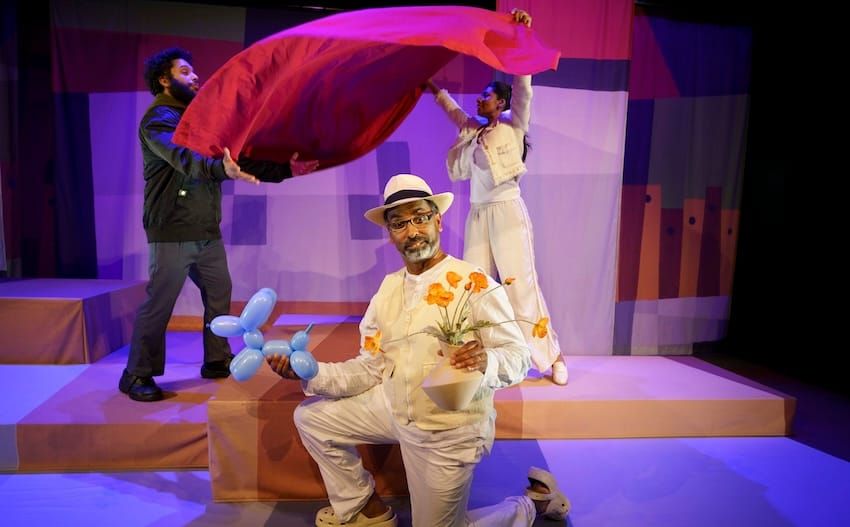
In this edition of Critical Corner, a review of Indian Ink's new show, Balloon Dog, which marks a fascinating naturalistic turn for one of New Zealand's most prominent theatre companies.
For almost 30 years, Indian Ink have been making shows that run the gamut of genre and form. From Krishnan’s Dairy right through to Paradise or the Impermanence of Ice Cream, the company’s works have employed pretty much every theatre technique under the sun, although most commonly mask, clown and puppetry to tell stories that frankly, no other company in New Zealand is telling. Balloon Dog, their most recent work, hits on something that I never expected the company to do: The domestic drama.
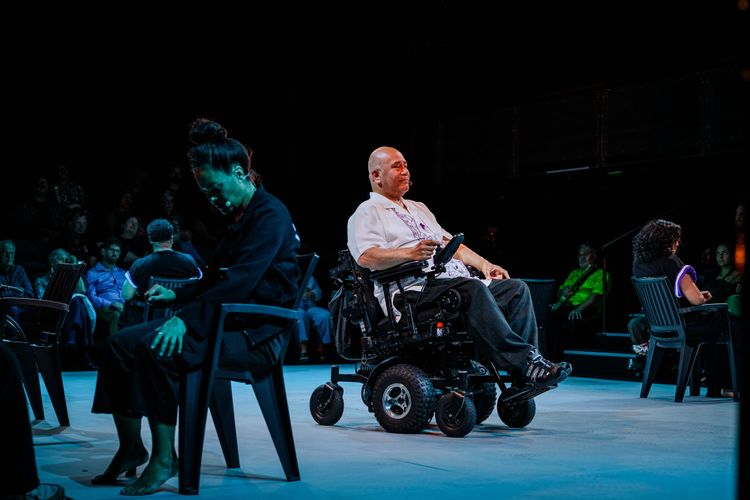
The show, written by Jacob Rajan and Justin Lewis, is “inspired” by Rabindranath Tagora’s Kabuliwala, an 1892 story Bengali that emphasises connection across nationalities, and takes place in modern day New Zealand. Ravi (Rajan) is a semi-retired architect living with his daughter, single mother Sara (Alisha Jacobs) and granddaughter MIni. Kabir (Jehangir Homavazir) is a night-shift worker at the petrol station who regularly passes the three-generation house and strikes up a friendship with five-year-old Mini. The story gets complicated when Ravi invites Kabir into their home, adding to the stresses of Sara trying to get both herself and her daughter through the days.
Despite the presence of Indian Ink’s now ubiquitous fake teeth and a few movement sequences, Balloon Dog is a deeply naturalistic show. Mini is mostly an implied presence, either brought to life by the three actors speaking in unison, or a plinking series of notes courtesy of onstage musician David Ward, but those three actors are mostly giving down-to-earth, grounded, performances that root the story very much in the here and now. It’s a surprising turn for the company, who have been mostly known for emphasising the fantastical in their work, to deliver a story in this register. (In that way, it actually harkens back to the simplicity of their first work, Krishnan’s Dairy, which became a period piece over time, but at its premiere was set very much in that present day.)
Other than changing the givens of Kabuliwala, Rajan and Lewis have introduced a subplot about migrant exploitation, explored through Kabir’s growing distress at being treated awfully by his boss – but knowing his only other option is returning to his former home, where his family have sacrificed everything to get him to New Zealand. It’s complex, rich, territory, but unfortunately much of the characterisation in Balloon Dog is bluntly expressed, through characters telling each other things they absolutely already know, almost serving as narrators of their own story rather than actually living it. It is the nature of the story, perhaps, where the three fundamentally good and decent people onstage have conflict less with each other and more with offstage forces, but it leaves the show feeling dramatically inert at points and lurching forward through the exposition at others.
The tone of the show is also a bit strange to parse; it’s not that comedy can’t express the kind of dilemmas present at the heart of Balloon Dog, it’s that the particular brand of comedy of this show, which is undoubtedly silly, is hard to transition into the dark, frankly quite sad, places that it ends up in. This is the kind of broad strokes style of writing that has served Indian Ink well in the past when married with their heightened theatricality, simple but not stupid, earnest but not sentimental, but when paired with the grounded naturalism of this story, and this particular mode of storytelling, it feels less offbeat and more offkey.
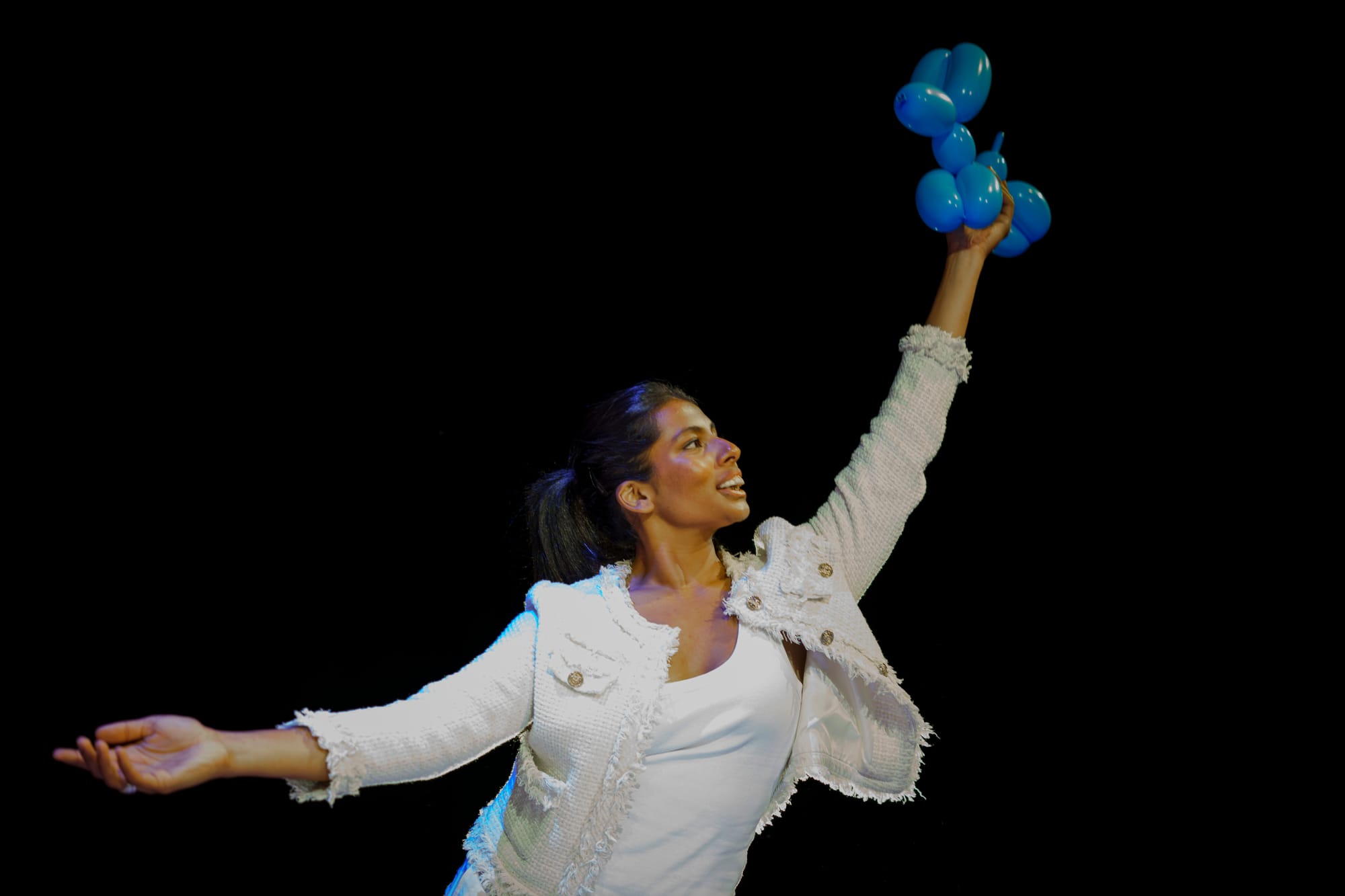
It relies on the actors, then, to deliver the nuance. Happily, they succeed. Rajan gives Ravi a cheekiness that is deeply appealing, it’s a huge treat to see him give his one-of-a-kind physicality to a more down-to-earth character. As the show goes on, as Ravi becomes less curmudgeonly and more aware of his privilege, Rajan plays his uncertainty with a touching level of subtlety; we can really see the struggle of a man who is so sure suddenly being unsure. As Sara, Jacobs has the most difficult role – she’s both comic relief and also the absolute bummer, acting as an impediment to Kabir connecting with the family – and nails it despite these dramaturgical contradictions. Her exhaustion, always a difficult thing for an actor to convey onstage, is especially palpable.
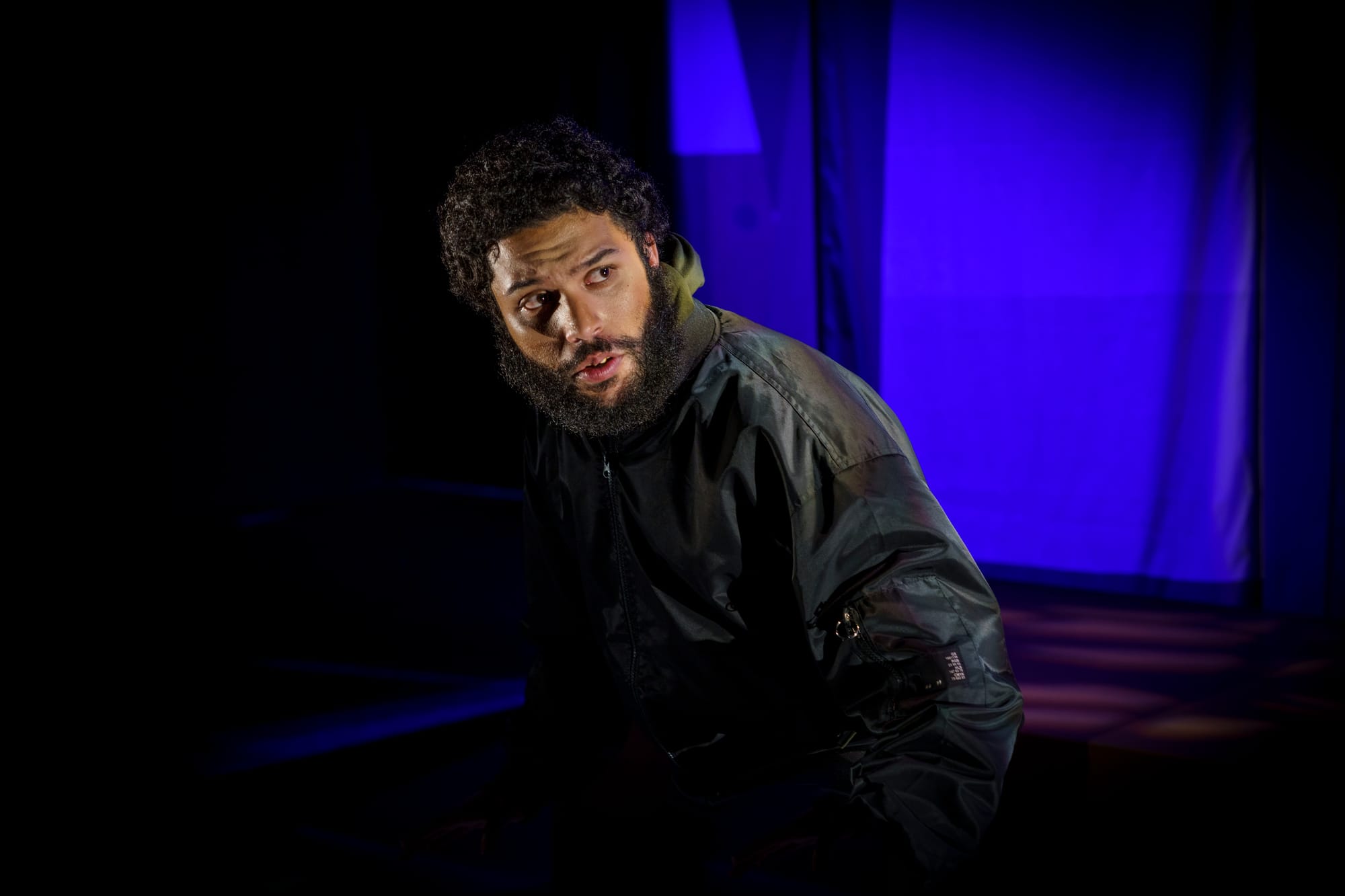
It’s Jehangir Homavazir who is the highlight of the show, however. It would be so easy for Kabir to come off as a cipher, a character who represents a dilemma, but Homavazir is so specific with his physicality and vocalisations – the little head shake that he works into every scene is particularly delightful – that he comes off as undeniably, tragically, real. Kabir is also the character with the biggest distance to travel in the show, moving from merely being inconvenienced to being absolutely stitched up by a cruel system, and Homavazir captures how a sweet, well-meaning, person can be pushed to do something horrible. It’s a brilliant performance, and one that delivers the weight that Balloon Dog is trying to get its audience to wrangle with.
Despite my quibbles with the writing and tone, there is an undertow to Balloon Dog that is undeniably affecting. Broad strokes can be bold and blunt instruments can knock down walls. The story of migrant exploitation that the show tells is specific, but the story about connecting, and believing the best, of people is universal. If you make the point you want to make, perhaps nuance and tonal consistency are overrated. Balloon Dog might have a shaky journey to hitting you right in the feelings, but how much does it matter if it nails the landing.
Balloon Dog runs at Q Theatre until June 20, then goes on tour in Australia. You can book tickets here.


Member discussion