Four days at PANNZ
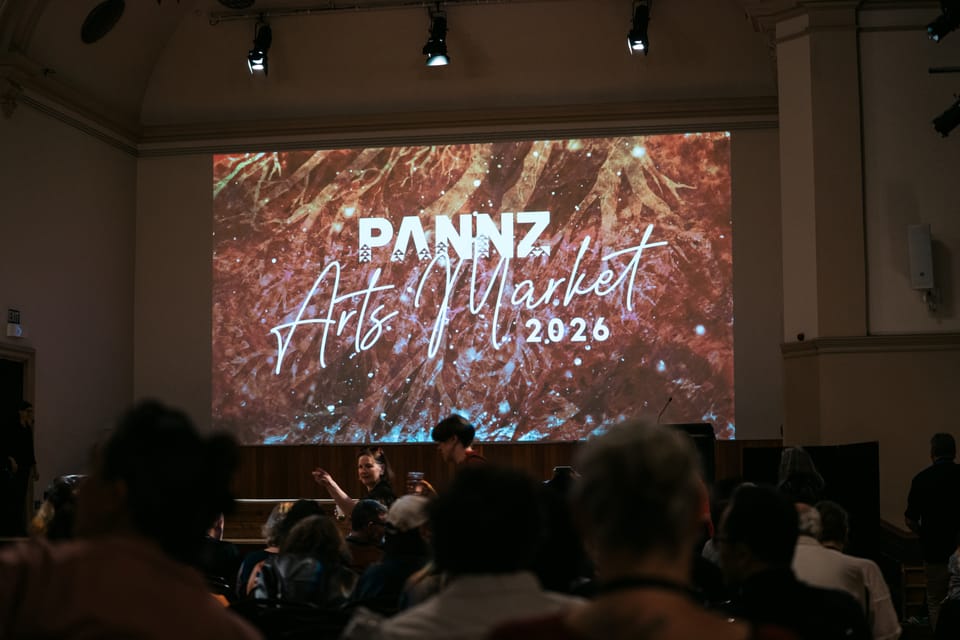
A reflection on four days at PANNZ (Performing Arts Network New Zealand), New Zealand’s national performing arts market.
The phrase “performing arts market” often seems weighted towards the third word in that phrase. “Market” immediately gives the reader a sense of transactions, of buying and selling, maybe even rows of stalls and vendors if you happen to be a more visual thinker. I’ll be honest, I haven’t been to a PANNZ arts market since I was a comparatively wide-eyed independent artist in 2017, where even the idea of talking to an international presenter seemed like a daunting task.
The vibe when I stepped into PANNZ this year wasn’t like a market at all. Or if it was, it was closer to a Sunday morning market – where you might go and see someone you haven’t seen in a few weeks (in this case, a few years) – check out their wares and their works, but ultimately, it’s a chance to check in with people, with companies, with presenters, with venues.
For those who are unaware, outside or inside the performing arts sector, the PANNZ arts market is an annual event (think of it like a conference) that connects artists, companies, presenters and venues from all across the country and all across the world. Across the four dates, artists pitch their various works across sessions, and between these sessions there are opportunities to network, to see shows, to build connections, and essentially, to belabour a metaphor, to tighten the “net” of the performing arts so that people don’t fall through. So that all the people, all the shows, get to the places they need to be.
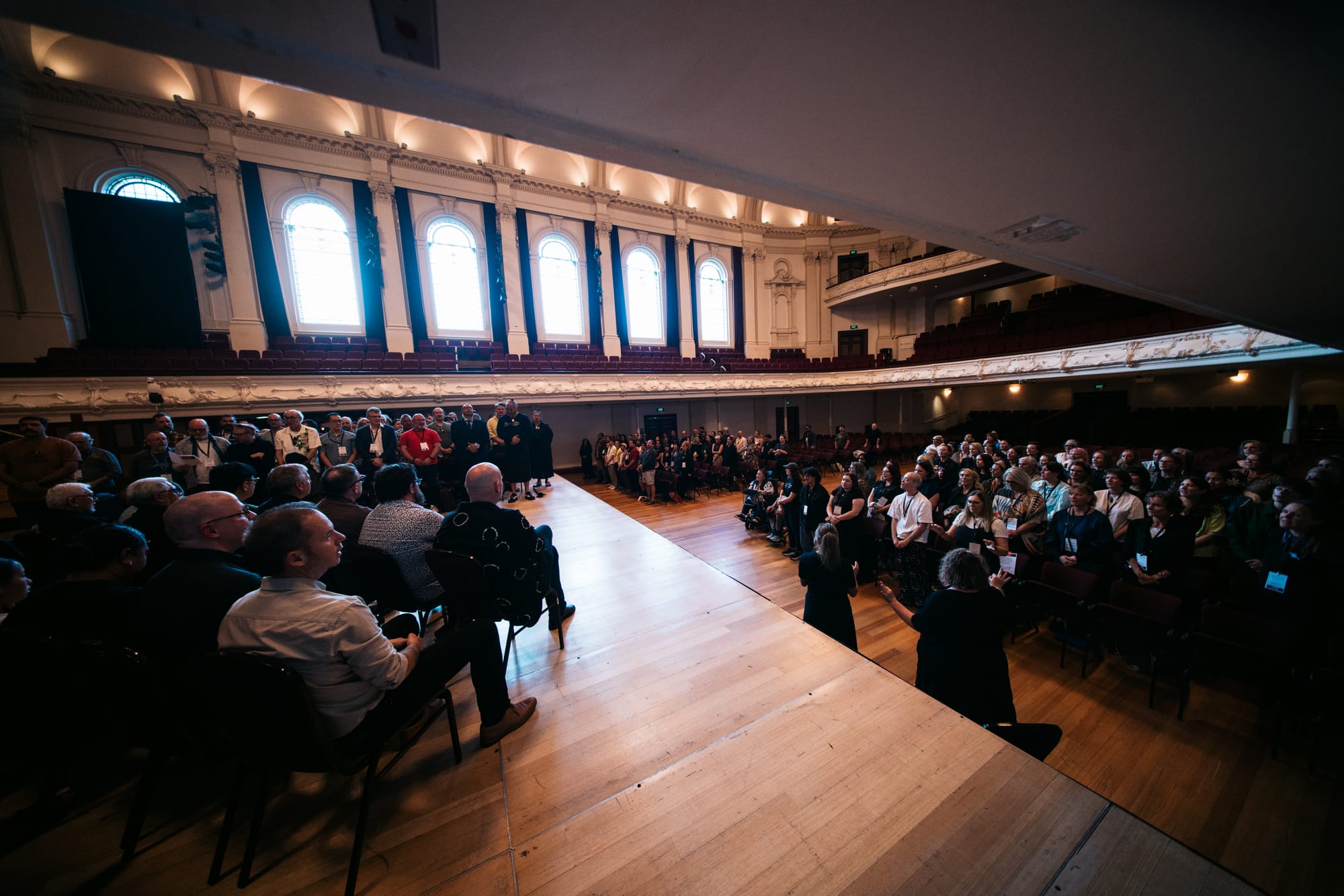
I was at PANNZ pitching a work called Elder, a verbatim work about queer men over the age of 60 that I’m co-creating with Shane Bosher (you learn how to condense your work into a quick sentence very quickly across the four days). Others were pitching works that they had already made – Te Pou, for example, pitching last year’s The Handlers and Wet, which premiered in the Auckland Arts Festival – or works that had yet to be commissioned – a bunch of one minute pitches were utterly delightful.
There’s obviously a transactional element to PANNZ, there can’t not be when venues are looking for shows to put in their venue, festivals are looking for shows to programme, and artists obviously really wanting places to put their shows on (and also pay for the privilege of doing so!). However, even though I was representing a show that’s absolutely looking to be picked up and programmed, some of the best moments I had were catching up with local people to see what they were working on, what their concerns were.
One of the best interactions I had was with a young playwright – and I am blessed enough to reach an age where I can legitimately use the phrase “young playwright” – who wanted some advice on how to get started, get programmed, get noticed. Another great interaction was with a producer that I’d met on a Creative New Zealand-funded trip to Edinburgh Fringe in 2017 (and actually even before that down in Wellington in 2014), giving them a quick suss of what the new writing landscape was, and connecting them with a few people, locally, and even back in their home of the UK, who share the same interests.
Additionally, as an indigenous artist from a race and culture which is barely represented in New Zealand – I highly doubt we even register on the census – it was a rare opportunity for me to engage with indigenous artists from that side of the world (Turtle Island, that is). Normally the name of the tribe that I whakapapa to gets blank stares when I mention it. Only a few hours into introducing myself at this year’s PANNZ, I met someone who whakapapas to an area closer to my side of the world than anybody from it. It’s perhaps a little corny, and definitely a lot sentimental, but these are the kinds of strong connections that get fostered through the arts; where else am I going to meet not just one, but several, indigenous artists from Turtle Island all the way in Tāmaki Makaurau?
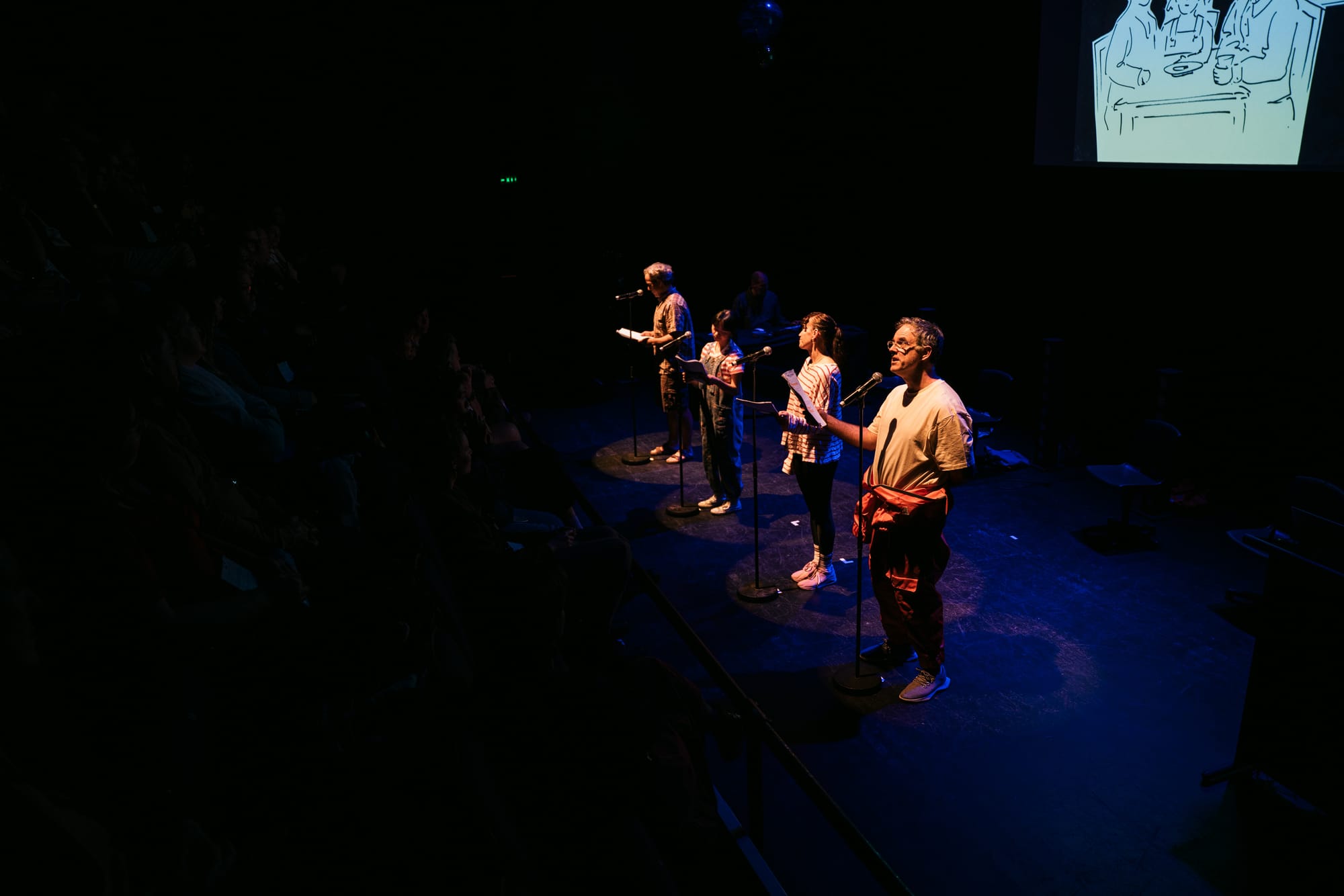
Another highlight was Rebel Alliance’s 20th anniversary wheako showcase. The Rebel Alliance, founded by Anders Falstie-Jensen in 2006, has been making out of left-field work for those two decades, and it was a genuine treat to reflect on the many shows that Falstie-Jensen has made in his career (including a genuine favourite of mine, Standstill, performed on three treadmills). So much of what you might see or engage with at an arts market is looking into the future, be it concrete or speculative, and the opportunity to look back at a company – and an independent company, which is important to note – that has done a truly impressive amount of work, is a really precious and special one.
Finally, and apologies for being slightly woo-woo here, just the opportunity to be in rooms with other people, with the explicit encouragement and expectation that you’re going to talk about art, is a great one. You get to do that at opening nights, but with love, and with self-acknowledgment, it’s often the usual suspects. New connections and new conversations are the lifeblood of the sector (with adequate funding and support systems being the veins and arteries). That blood felt well and truly flowing across the four days.
That was my PANNZ. I’m not a hustler – and never will be. I’m a buyer, not a seller. I’m a networker only in so far as I’m interested in talking to people and getting to know their stories, their whakapapa, their lives. I’m an artist at heart, wanting to engage with other artists for the betterment of my art and my community. PANNZ is there for the hustlers, it’s there for the buyers and the sellers, but it’s also there for the artists. I felt that – hard – this year.
Member discussion