Critical Corner: Auckland Arts Festival Week Two Round-Up
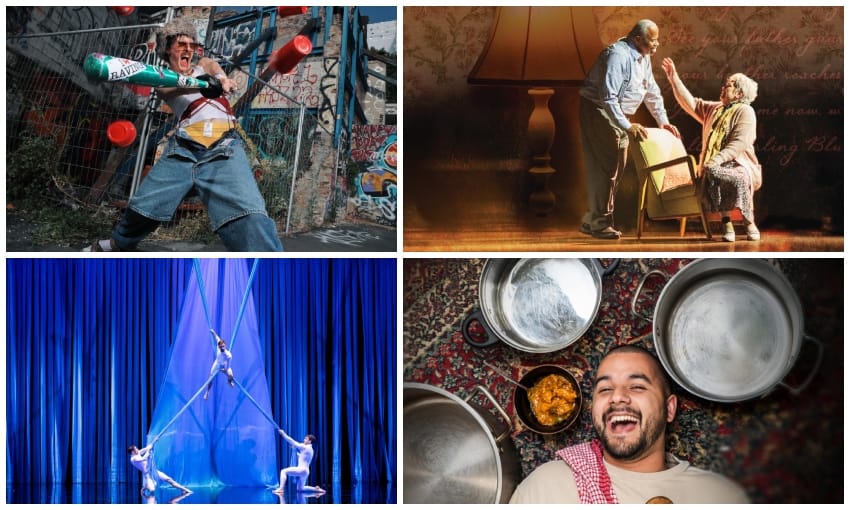
In this edition of Critical Corner, reviews of Duck Pond, Bluebeard’s Castle, A Place in The Sultan’s Castle and The Butterfly Who Flew Into the Rave.
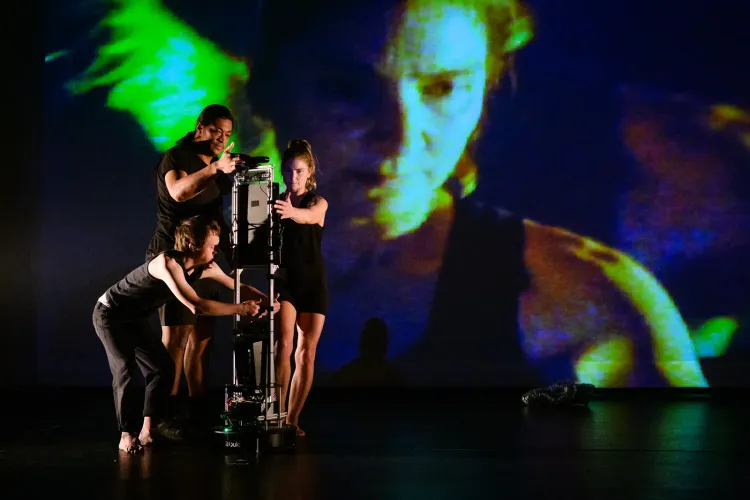
What if Swan Lake was a lot more fun, moderately sexier and slightly gayer? You’d get Circa’s Duck Pond, a delightful romp of a riff on that famous ballet. The show, created by Yaron Lifchitz with the Circa Ensemble, doesn’t really follow the plot of Swan Lake, as I dimly remember it. There’s a prince, there’s a white swan (who references the ugly duckling), and a black swan. There is much more comedy, and as expected from a circus show and not a ballet, much more circus than ballet.
Circa are at the top of their game. This isn’t a series of context-free acts curated underneath a loose theme – and while there’s nothing inherently wrong about those shows, there’s nothing inherently right about them either – but a show with a fully-fledged narrative and concept. It is slick spectacle, delivered energetically and enthusiastically, with the appropriate balance of silliness, humour, and expertise.
An odd thing happens to you when you are fortunate enough to see a lot of circus (for free, I might add). The mind starts to become numbed to the physical and acrobatic feats on stage. Suddenly, three people standing atop each other’s shoulders without buckling or falling becomes quite mundane to you. This is through no fault of the performers, nor the form, but simply through seeing this particular form more than probably 99% of the world (maybe even add a .9%, but someone else can do that for me). I imagine it's the equivalent of not being impressed that actors in a two hour show can remember all their lines despite it being objectively impressive.
There’s a lot of that in Duck Pond, and while I could tell the people around me were delighted, I felt my own familiarity with circus holding me back from truly enjoying it. However, the “oh shit” moments – which I won’t spoil there – were truly spectacular. The kind of moment where you see every dollar you’ve spent on the ticket, every minute you’ve spent watching it, paid off in full. The people who were fully into it, perhaps seeing the first or maybe second show, had the best time. My enjoyment remains unfortunately dimmed by familiarity, if nothing else.
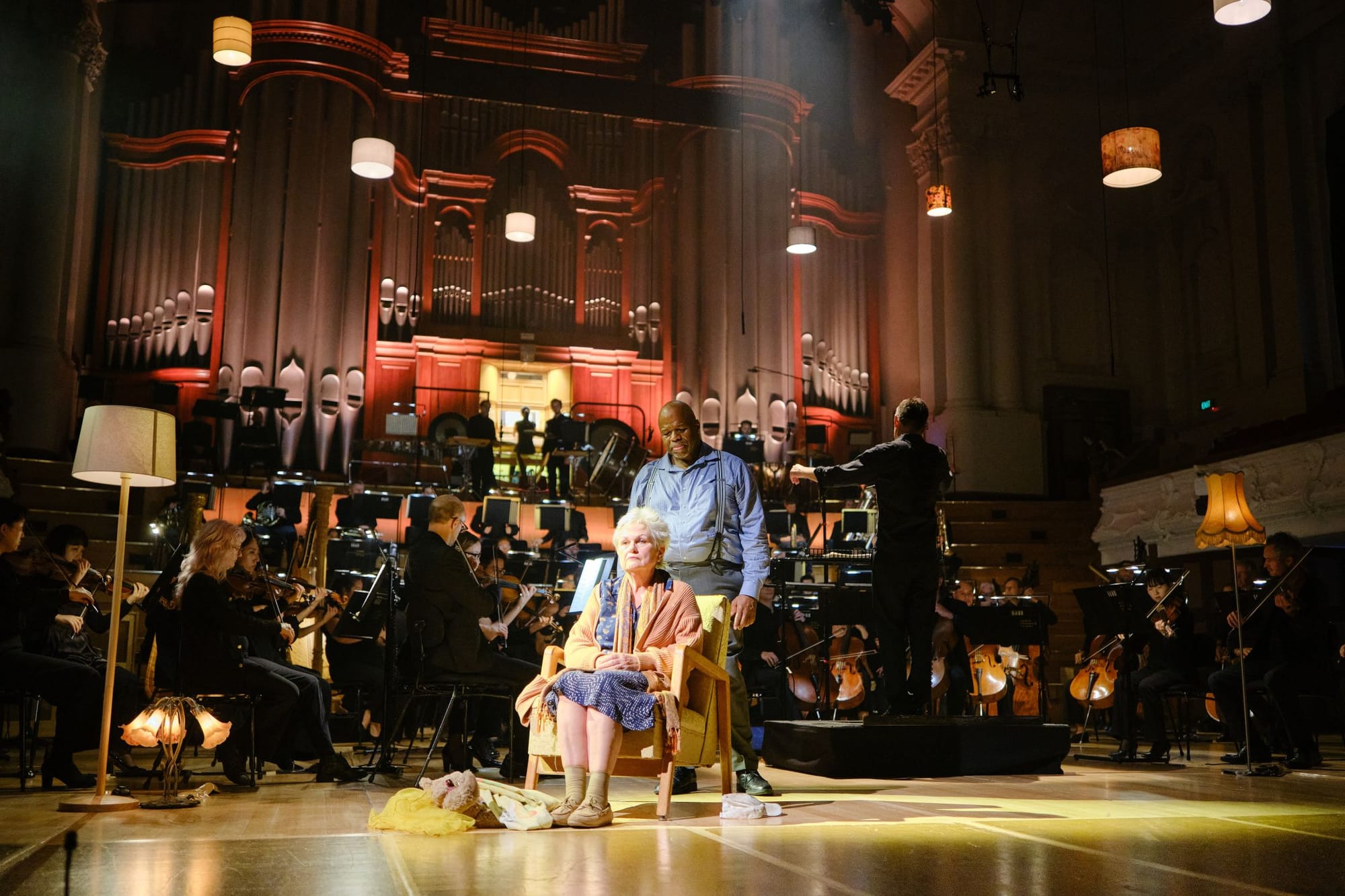
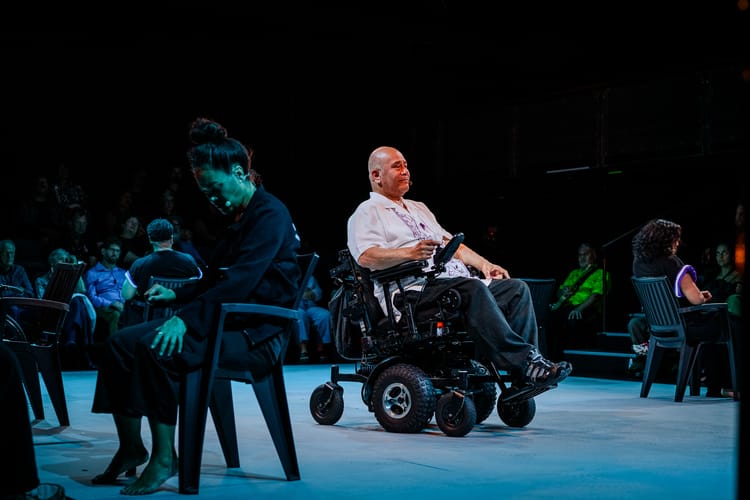
On the other hand, New Zealand Opera’s Bluebeard’s Castle gets quite an edge from being a little bit more familiar with the form. Presented in the festival as a concert staging rather than a full blown production Bluebeard’s Castle at the Auckland Town Hall has an appealing intimacy (at least compared to, say, the Kiri Te Kanawa Theatre). The staging, as opposed to the full-on operatic setting, also suits this version of the show. While the interpretation has modern relevance – Bluebeard and Judith are now an elderly couple in a suburban home, with Judith being afflicted by dementia and increasingly distressed by the unfamiliarity of what’s around her – it occasionally feels like a little bit of a reach for the myth.
The highlight of the show were the performances of the two leads – Susan Bullock and Lester Lynch – as Judith and Bluebeard, respectively. Bullock reaches the back rows, or at least the front of the circle where I was sitting, with her distress, while Lynch straddles the line between charming husband and perhaps threatening predator believably. (Occasionally, their lower registers were lost under the orchestra, and they dipped out of my sightlines, but minor quibbles.)
It’s a brave programming choice, and one that I ultimately think pays off. I was unfamiliar with the score, and the haunting nature of Bartok’s compositions, as played by the Auckland Phil, put me in a different space that I often am with opera. I wasn’t awed by the performers, I was concerned for the characters. When Bluebeard’s Castle gets to its final, frankly devastating, image, I was smacked right in the soul by it. A woman alone, forgetting the life, the love, she might once have had.
There’s an inherent appeal to shows where people make food in front of you onstage. An audience loves to see people make food, and there’s the thrilling chance that something might go wrong (there might be a similar sadistic appeal to watching circus for some people but can’t relate).
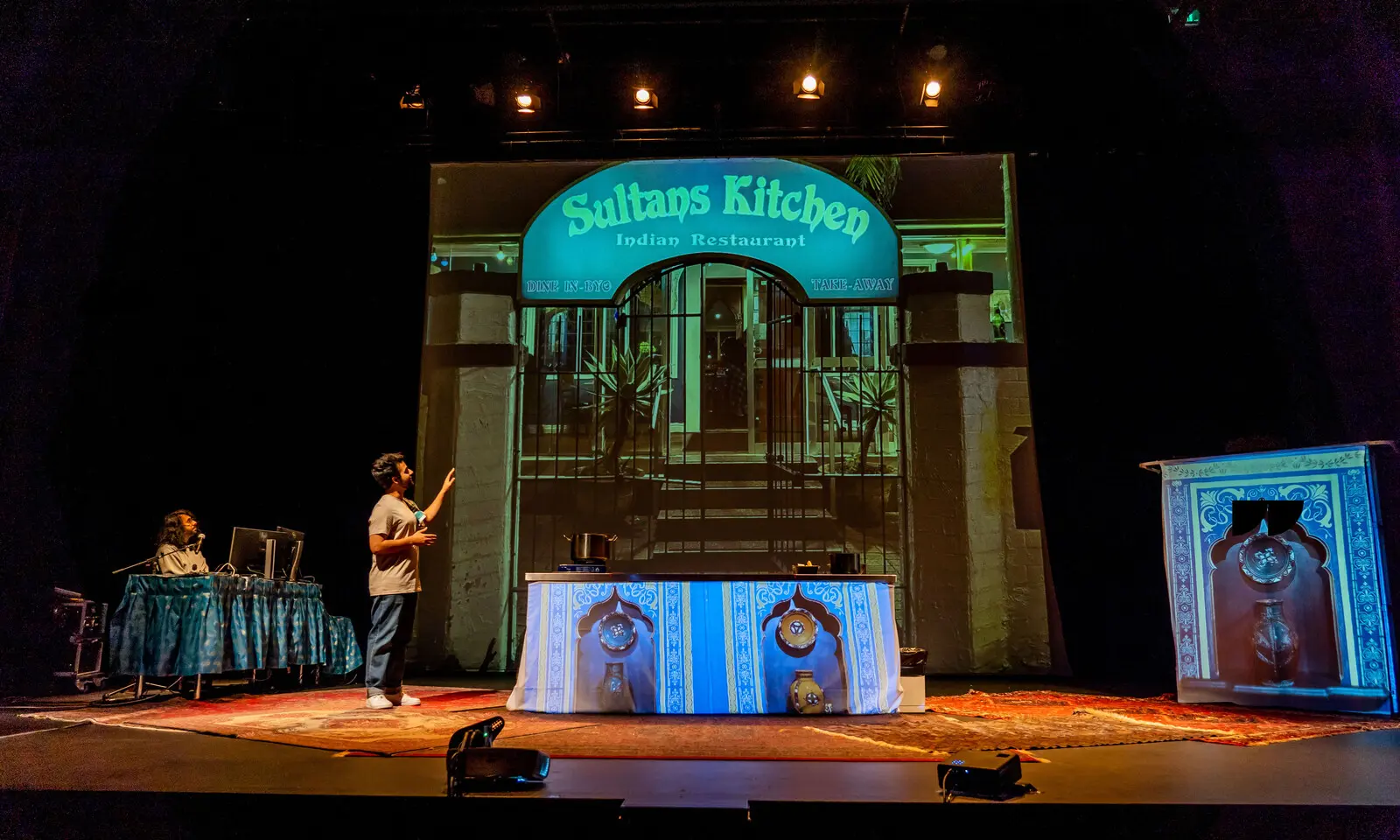
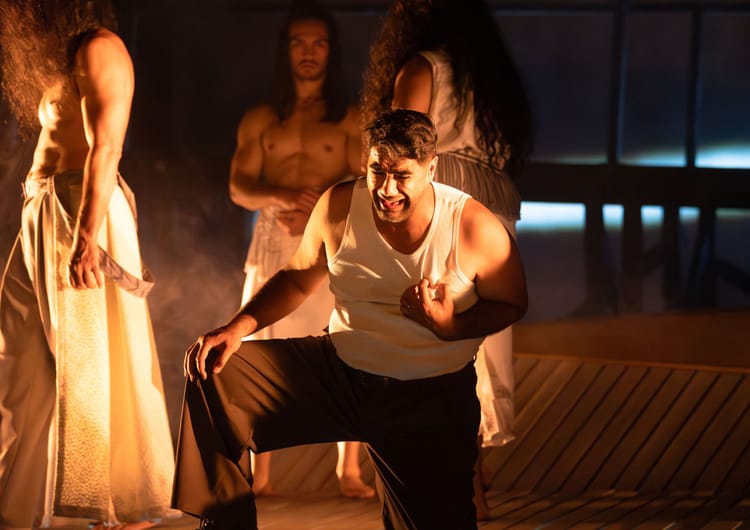
A Place in the Sultan’s Kitchen (or How to Make The Perfect One-Pot Curry), as the title suggests, sits comfortably in this form. Writer-performer Joshua Hinto makes a chicken curry in front of us, all the while telling us the stories of his multiple origins – among them: Persian, Sri Lankan, English – delivered with the most Sydney of Sydney accents. As he makes this chicken curry and tells the story, he’s joined by his brother Dan, who chimes in only on occasion to gently re-direct or chide Hinton.
The most appealing part of the show are the stories of Hinton’s grandparents; four different nationalities, four different faiths, four different backgrounds; there could be several hourlong shows about his grandmother’s journey from Iran to India, eventually ended up in Australia. When he tells their stories, the show is at its most complex, and interesting. It’s a gentle reminder that everyone has a story, everyone has multiple backgrounds, and the collisions of those backgrounds, especially when those backgrounds are different cultures, are worth analysing.
However, A Place in the Sultan’s Kitchen is a form that misses me more than it hits me. It’s warm, wholesome, but the stakes aren’t very high here, and there’s not much electricity here. Even the part of the show that feels like it should have stakes – Hinton cooking a curry onstage – feels a little bit softballed; there never feels like any risk that he could get it wrong. Part of this is by design – Hinton is telling stories that have already happened, and for the most part Hinton as character and performer seems to have resolved his relationship to these stories. Looking around at the audience on the Saturday matinee, a little bit older, a little bit whiter than me, I realised I wasn’t the target for this show. It landed with them, I saw a few tissues coming out, but it fell somewhere to the left of me, unfortunately.
It feels appropriate to get to the mid-point of the Auckland Arts Festival with an experience like The Butterfly Who Flew Into The Rave. The show, which premiered at Basement Theatre in the 2024 Pride Festival, has been a runaway hit, touring seemingly everything, including to Edinburgh Fringe for a massive season last year. When it was announced as part of this year’s programme, in Q’s much larger Rangatira space, it felt like a homecoming for the work.
Somehow, I’ve never been able to make it to see the work, so this was amongst my most anticipated works of the festival. It did not disappoint.
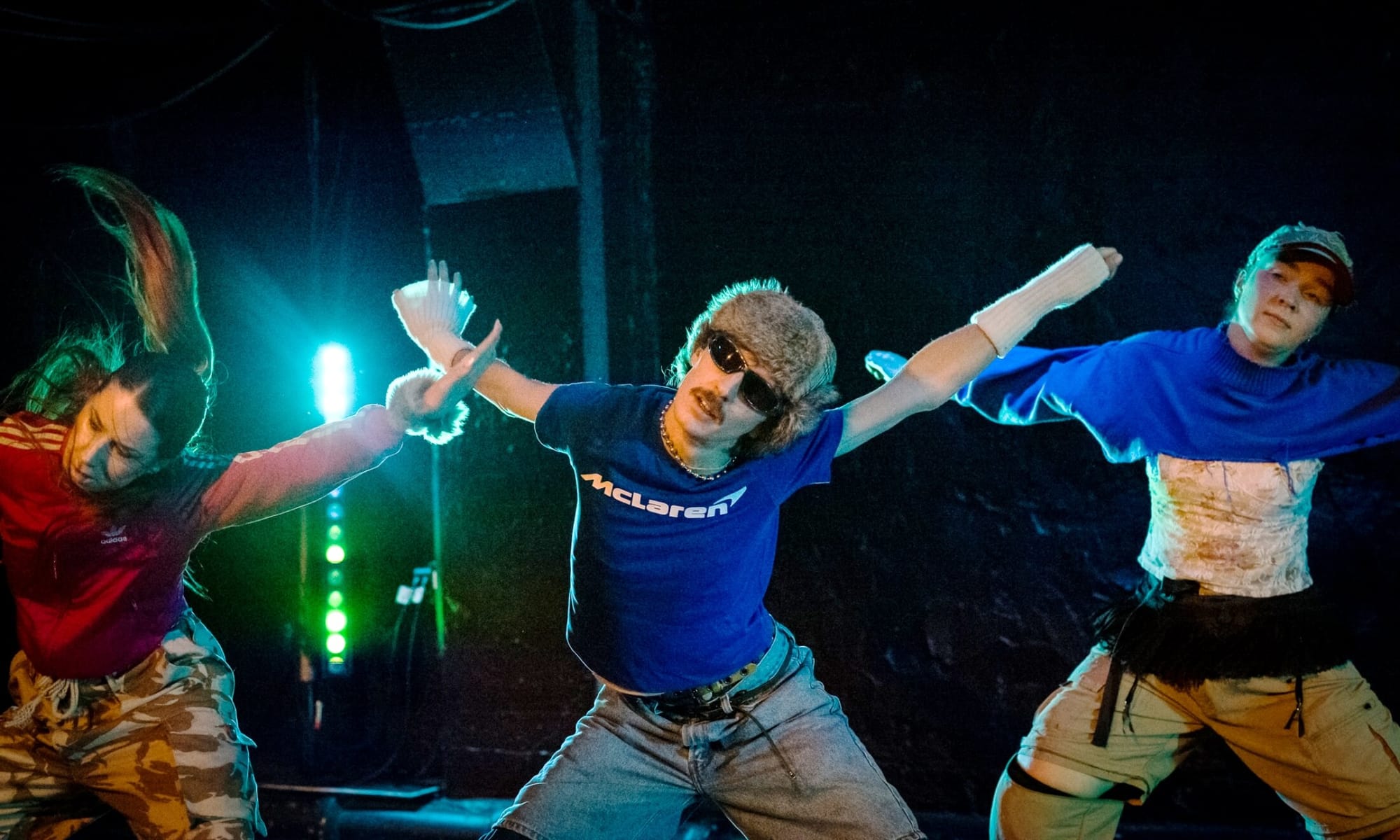
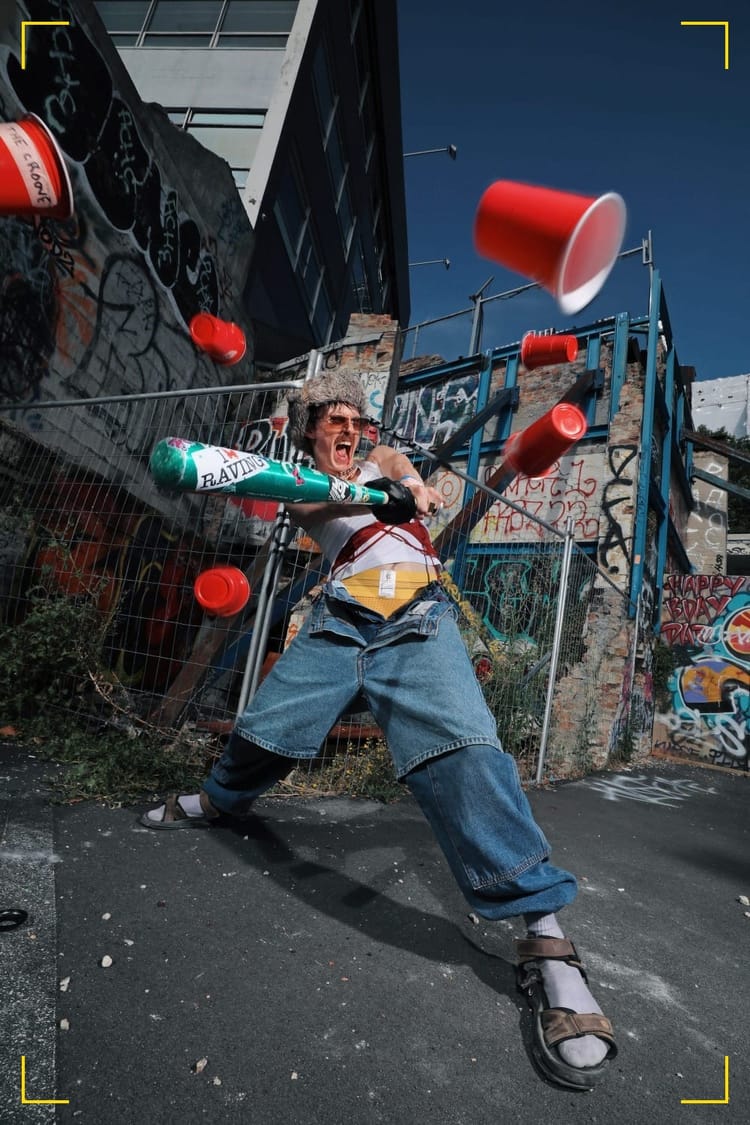
The work, created, choreographed and performed by Oli Mathiesen, and also choreographed and performed by Lucy Lynch and Shavorn Mortimer, is a piece of endurance. For an hour (plus however long it takes to get the audience into the space, and settled), the trio dance to Suburban Knight’s Nocturbulous Behaviour. The programme describes it as “the atmosphere and culture of a 3-day rave condensed into high art, streamlined performance where you watch the destruction of three human beings commence in front of you.” It’s elemental, it’s visceral, and it’s a shitton of fun.
I’m a sucker for art that blends athleticism and craft into it. What happens to an artist when you push them as far as they can go? What happens to a performer? What happens to an audience when they are encouraged to push these performers further? I’m not entirely sure that these are the questions that Butterfly is asking, but in the midst of a festival, with various works (including those mentioned here) stretching form, performer, and audience to different degrees, they’re questions that I found myself asking.
Beyond those questions, which I’m not sure I have the answers for anyway, Butterfly is one of those ideal festival shows. It’s a work of excellence – I can rarely think of a dance show that has engrossed me for an hour without my mind straying at least once. It’s an audacious work – it’s a lot to ask of an audience. It uses the space in a way I haven’t seen before – and I’ve seen my share of shows in Rangatira, but I haven’t seen it transformed this convincingly into a club space before. (And shoutout for, on Saturday night, actually briefly transforming it into a rave for the audience.)
The stakes of Butterfly aren’t in potentially seeing the performers fails, it’s in the joy of seeing them succeed. It’s in the thrill of seeing them get through the show, of pushing themselves further and further for the sake of craft, the sake of art, the sake of audience. It ignites something in an audience, something ferocious, and something communal. I’m still thinking about it, and still probably feeling the bass somewhere below my ribs. That’s exactly how I should come out of a festival show.
All four shows played as part of Auckland Arts Festival 2026.

Member discussion