The cost of a failed coup, the cost of a torpedo, the cost of art
An analysis of the arts funding crisis, what we know about what our money pays for, and what the public needs to know.
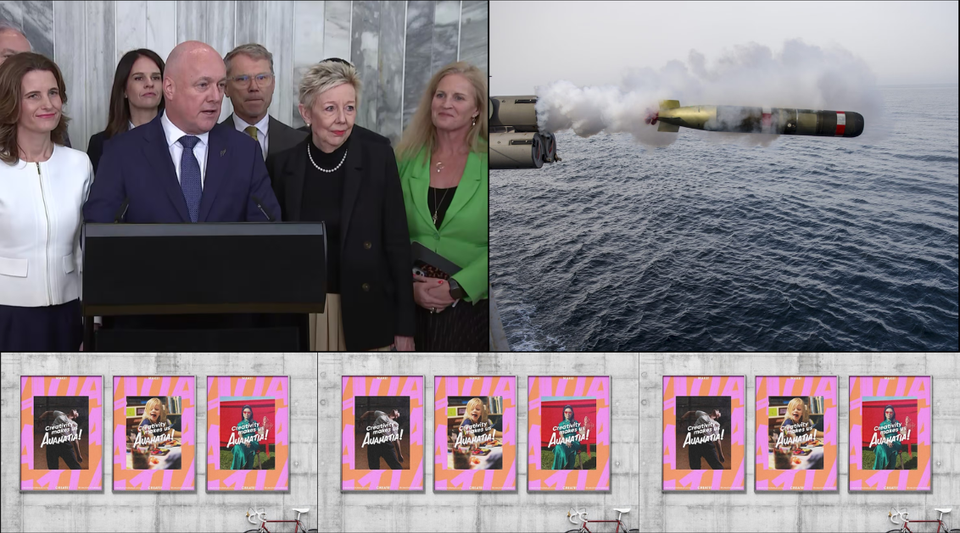
How much does a failed coup cost? According to an guesstimate from Stuff’s Lloyd Burr, it cost $35,439 to fly 42 MPs to Wellington for a vote-of-confidence by the National caucus on Christopher Luxon’s leadership. One presumes that doesn’t include catering, trips to and from the airport, and the run-on time-labour-energy costs of postponed or cancelled meetings elsewhere.
How much does a torpedo cost? In June, the United States’ State Department approved a $119 million (NZD) sale of MK 54 torpedoes to New Zealand. According to the department’s press release, that is 20 torpedoes. So, $5.95m per torpedo.
A failed border security project actually cost nearly $40 million. The National government have spent $323 million planning roads that were promised to start development in 2024, and have yet to do so.
These are concrete things we understand. We understand that 42 MPs flying to a city for a day costs that much – and it’s a waste. We understand what a torpedo is and does – although we may have different stances on its worth or not, but I’ll broadly assume that most New Zealanders would rather not spend roughly the cost of five and a half houses in Auckland on a single torpedo. We understand that money thrown at projects that never come to fruition is a waste.
How much does a piece of art cost?
Well. It varies.
I think there’s a massive gap in the public understanding when it comes to funding arts and culture – and I’d even fight a losing battle that lumping those two things together does more harm to understanding than good. In nearly every article I’ve read about the arts crisis, the touted value of the arts sector to the national GDP is brought up: $18.5 billion, so 4.3% of the total GDP. This figure comes from the Ministry of Culture and Heritage.
That figure has also been stated ad nauseam, whenever the subject of arts and culture funding comes up. It’s an important figure – if anybody really knew what it meant. As much as $18.5 billion is a real number, it doesn’t make sense to the vast of majority the general public who are dealing with completely different amounts of money in their every day life.
The other figure that is brought up is that for every dollar spent on live performance, $3.20 returned in benefits to the wider community. This is arguably a more useful statistic, and an easier one for people to understand. People understand how far a dollar goes, less so than they understand how far a billion goes. This comes from a Massey University study that revolves specifically around live performance – presumably excluding other kinds of art like literature – that no doubt return GDP value as well.
If you’re reading this newsletter, either you’re an international friend (hello!) or you already know there’s an arts funding crisis in New Zealand. In the latest round of funding, Creative New Zealand was able to offer over $104 million, over three years, to 94 arts organisations from around the country. This is specifically for Tier 3 and 4 organisations – two tiers that incorporate some of our largest arts organisations like Auckland Phil and the Court Theatre, and smaller arts organisations like Trick of the Light and Word Christchurch. Funding for smaller organisations – Tier 1 and 2 – will be announced in September.
For context, Creative New Zealand receives $16.689 million worth of funding from the government each year (which projected to remain the same through to 2028/29) and receives a baseline of $52.789 million worth of funding through the Lottery Grants Board.
These are all, again, concrete numbers that don’t really tell a story. If you don’t know the landscape of the arts industry, that might sound like a lot. It doesn’t tell the story of who didn’t get funded. It doesn’t tell the story of what organisations got funded but not for nearly the amount they need to deliver the work they applied for. It doesn’t tell a story of scarcity, of people working for cheap or free, of shows not being delivered, of art being compromised or not being made at all.
Some of these stories have been told. Chris Schulz’ story for The Spinoff – “Has the arts ever had it this hard” – despite some incorrect facts and figures is a pretty good introduction. Erin Harrington’s article on the consequences for the South Island of this latest funding round, and the apparent invisibility of those communities to funders is excellent.
There are other stories to be told around this arts funding crisis. I’ve had a few of them in person and in DMs. Why did big companies get so much? Were we surprised that some companies weren't on that list? What does it mean for companies who got offered less than half of what they applied for to now have to spend a significant amount of time they should be spending making the art they promised to make now have to strategise or crowdfund to make that work?
These are all highly subjective conversations, and comparing most of these organisations is like comparing a single apple to an apple orchard. Each company – even the rare ones who got increases – have their own issues to deal with, which makes uniform advocacy quite hard to achieve. Advocating for your ability to continue to exist, at all, is a completely different beast from advocating for your ability to exist sustainably, or to exist on what you’ve been given. (I think it would really behoove the organisations who have been funded, or received increases, to acknowledge the arts funding crisis as well, but I’ll let that rest with people’s consciences, comms people and long-term strategies. Shoutout to Basement Theatre for being one of the organisations to do this.)
Which moves onto the one conversation that has been sort of unifying: how is the sector going to respond? Ultimately, advocating upwards is simply not working. The response from our arts, culture and heritage minister – and again, it is wild that those three distinct things are conflated but again, again, losing battles – makes it pretty clear that nothing is going to change for the better. And that was before he picked up five new portfolios, including the one responsible for the aforementioned torpedo.
We have to advocate outwards. We know that the general public enjoys art. We know they engage with it. We know they want more of it. Arts, the arts sector, and the arts industry need them to advocate for us, and with us. But to do that properly they have to understand us. What does the money for, what does it provide – and what happens when it’s gone.
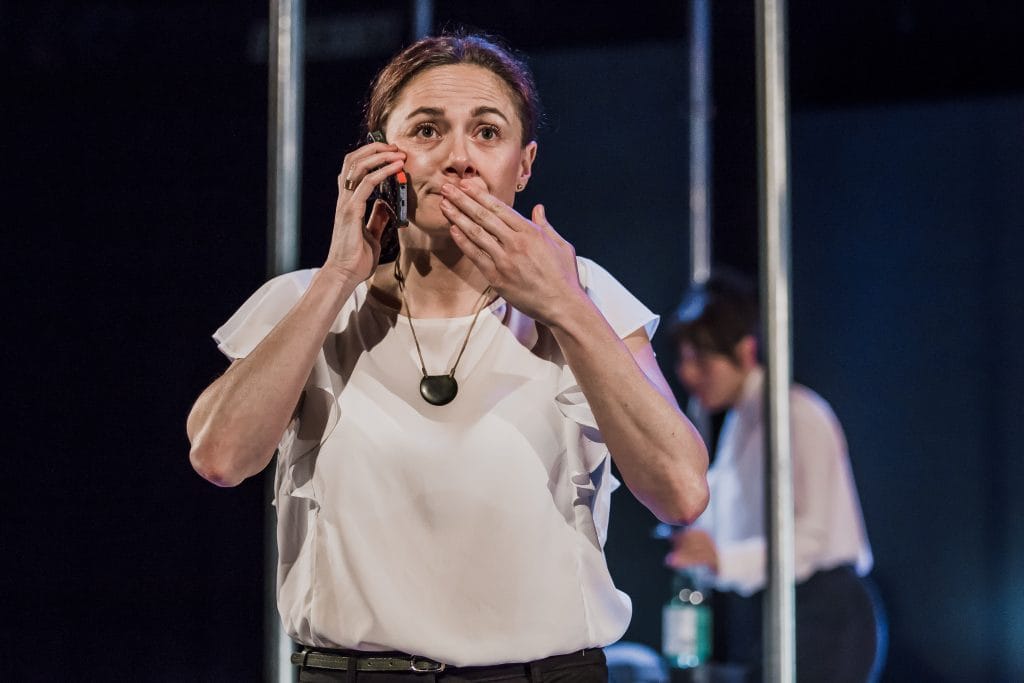
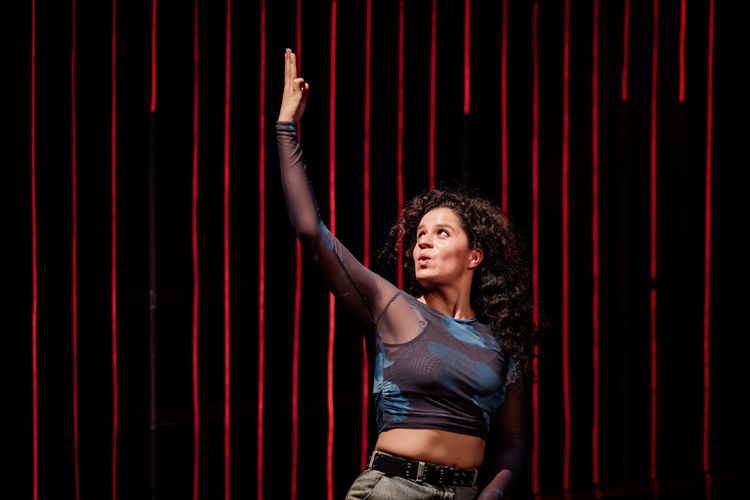
And, to provide some transparency of my own: I received funding through Creative New Zealand’s Creative Impact fund to put on a show in November. All that most people would see is the announcement: “$15,000 - towards the premiere production of new experimental naturalist work All You Had Was Fun”.
To compare for a similar scale of show that I've done: I put on in 2018 called Burn Her, which sold out, we applied for, and received, $39,377.50, and the show’s total costs were estimated at $52,540.60. That show had a cast of six, three designers, a director, a stage manager, a producer, an operator, and was performed as part of Q’s Matchbox season for two weeks (the specific details of which I forget, but essentially a lot of our venue costs were in kind). In my fifteen year career, Burn Her is the only other production I have personally received Creative New Zealand funding for in my fifteen years of working in this industry.
Here’s the story behind that $15,000 stated above: I applied for $35,500, which is still pretty insufficient to put on a show of this scale. I have put $11,000 of my own money into the development of this show to pay actors for their time, not including the hours that I put into writing it, which went unpaid – and feel free to judge my financial acumen on this privately. While everyone who works on the production will be paid a flat fee (which I’ll withhold for their sake), they should be paid hourly, and more than they are being paid. The venue it will be performed in is cutting us a brilliant deal so we can afford to perform there. I am in the process of beginning a crowdfunding campaign and looking for private investors so we can get the show on at a scale that values the investment that has been put into it.
None of this is to say that I’m ungrateful for the funding I’ve been offered. I neither serve nor consume sour grapes. 247 projects applied for this same fund, 27 applications were approved, and only 6 of those are within my artform. There are so many people who have to do their project with absolutely no money or not at all. This is simply so that people – in the arts industry, outside of it – can have a bit of an insight into how much it costs to put on a show, and even then there are compromises being made.
None of this is a cry for help (save that for the crowdfunding). It’s a plea for understanding. You can’t advocate for something unless you understand it. You can cry funding cuts until the cows starve to death. But until people understand precisely – dollar by dollar, project by project, company by company – what is being lost, they can’t begin to speak for its survival.
The powers that be refuse. Empower the people to step in.
Is our art worth more than a torpedo? Is it worth more than a failed coup? Is it worth more than a road that goes nowhere?
Note: This piece has been updated to reflect more up to date statistics from the Ministry of Culture and Heritage (18.5 billion as opposed to 17.3 billion, 4.3% of the GDP as opposed to 4.2%).
As always, reading and writing takes time, and if you want to support the amount of time it takes (and ensure that the scant amount of meaningful coverage of local art can continue), please considering supporting Dramatic Pause with a paid subscription ($8 p/m, $60 p/a) and if you can't afford a paid subscription, please share the work with your networks!

Member discussion