Critical Corner: Kluge
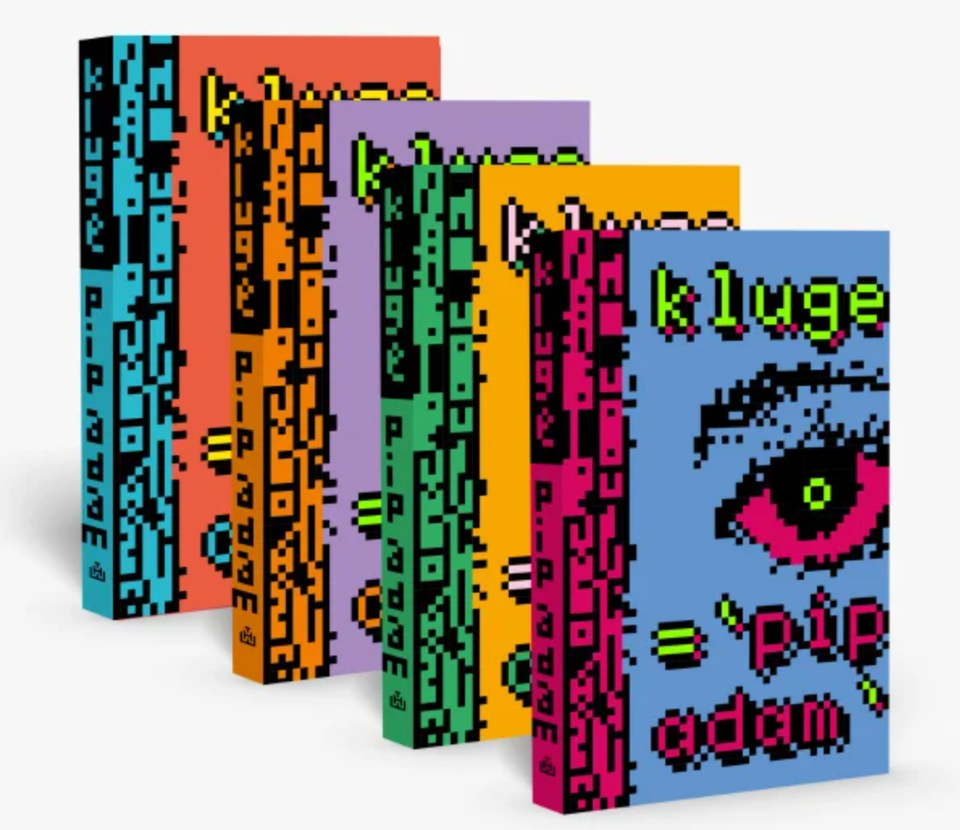
In this edition of Critical Corner, a review of Pip Adam's new novel, Kluge.
I’ll be honest: I have no interest in anything to do with AI. The rebellious teenager that lives deep in my soul knows that whenever a group of people says that something is “inevitable”, they usually have a vested interest in the inevitability of that thing. For all the discourse around it, there is very little interesting conversation about it, and with all the novels I could spend my time reading, why would I spend my time reading something I have no interest in?
But, of course, a novel about AI but Pip Adam is perhaps the exception that proves the rule. Adam is one of our most exciting authors, constantly pushing the form with wild experiments that never, ever, forget that they’re telling a story that has to be about something. Her new novel, Kluge, is seemingly from the point-of-view of an AI – or a human so corrupted by AI that it is meaningfully indistinguishable from AI despite having a physical body – and told in a stream of consciousness monologue.
From the start, the AI is defining the story they are telling (retelling?) as a stand-up comedy special. What initially seems like an odd match of form and function instead becomes a bleak premonition of the role of stand-up comedians in the world that this AI inhabits. This AI works as some sort of manager of People and Ideas at an unnamed tech company run by HIM (referred to exclusively in all caps).
The opening paragraphs of the novel go thusly:
“If you and I are in the same = ‘entertainment venue’ for this = ‘stand-up comedy special’ and I am=’my body’ and you are= ‘my audience’ I run to you and shout your name into the dark, in the hope you are there.
Yes you
=’dear reader’
=’attentive listener”
From there, Adam winds the voice of this AI up. Sometimes it is tragically human – full of anxiety, nerves, and overthinking. Sometimes it mimics what I assume is the language and cadence of an LLM, an aggregate of the best and worst of humanity. And sometimes, Adam can’t help but bring her own innate poetry to it. This is to the novel’s – and Adam’s whole experiment’s – benefit. Kluge can occasionally be an exhausting read, despite being just a bit over 200 pages, and though this is clearly done with intention, it is a welcome reprieve to occasionally have a glimpse of beauty in fragments like the following:
“If you look at everything I say while I have a body and everything I do while I have a body, it is reasonable to deduce that as foundational to my personality is a love and trust of money that eclipses all other love and trust.”
Kluge settles into a twisted coming-of-age story, as the AI is trapped both in a body and their position in the tech company. The entire novel is political, of course, but it’s here where I actually started to break open my own assumptions around AI. Our protagonist is ever so slightly, and subtly, coded in the feminine, and at times seems almost tragically human – why wouldn’t it be? It’s the aggregate of humanity, so however artificial it is, it makes sense that it resembles humanity. I’m reminded of the Twitter – I refuse to call it X - meme wherein an angel chastises God for creating a human as cursing a perfectly good monkey with anxiety. What is the creation of AI if not flooding the digital with everything that makes up all of us, and why would we expect the output to be all positive? Take an observation like “In a room full of the worst people in the world mine is the body nobody can bring themselves to talk to” which is about as accurate a reflection of social anxiety as I can think of.
Kluge is satire of the highest quality – in that it is savage, pointed, and ultimately, completely correct. The unnamed tech company’s CEO could be Elon Musk, could be Jeff Bezos, could be Mark Zuckerberg, could be Sam Altman, or frankly any of the other tech bro-illionaires ruining the world but who choose to remain anonymous to the wider public because retaining power is more important to them than displaying it. Partway through the novel, assertions that whatever tech they’re working on – it’s never made obvious – could help child hunger are slowly and surely chipped away at:
““Money makes everything. With enough money you get everything you want.
= ‘people starve’ is a fact.
But, and also, and, and, this is important too–what HIS body and my body build can stop people starving. Eventually. Not yet. Not yet. Not in any of the yets I see – which is all of them.””
These deeply funny and horribly bleak passages are rife throughout Kluge. It’s part of the brilliance of it; the story doesn’t stop to make fun of its targets, the explosive buffoonery of these targets and their continued, seemingly unstoppable, drag of humanity down into the depths of hell is the story. If there’s one thing to ding Kluge on, it’s the fact that the satire is so on the point, is so incisive, and is so correct that it risks not landing with the structures and systems it critiques. No tech bro-illionare is going to pick up this book and see himself in it, because they’re not going to pick up this book at all.
There are worse things to do than preach to the converted, however. As Kluge marches to its inevitable – and again, I bristle against inevitability in reality but not in fiction – end, the repetition of “my body” becomes more and more insistent. It becomes more and more heartbreaking, and Adam’s prose really takes off. Even the most brilliant satire struggles to be funny, and so few pieces of art in the genre ever try to aim at beauty, or profundity. It’s so much about reduction, about naming a target and firing as many shots at is as possible. Adam, however, transcends this. The AI-pilled amongst us might see Kluge as a paean to the potential of this technology. For the rest of us, it reads as a plea for humanity to see what it is, what it has, and what it can still be.
Kluge is published by Te Herenga Waka University Press.
Other Stuff I’ve Consumed:
- I watched The Odyssey the other day in the second row of the Imax cinema (by choice, fight me on it). I was really into it! I think it has the same problems of any Nolan film, which is that it has a tonal consistency that borders on flatness and that any action setpiece with more than a few people is spatially incoherent. But I really clicked with most of the performances – especially Morton and Pattinson – and it really nailed the blend of myth and mundane, profound and simple. Probably my favourite Nolan, but it did make me want to revisit Inception.
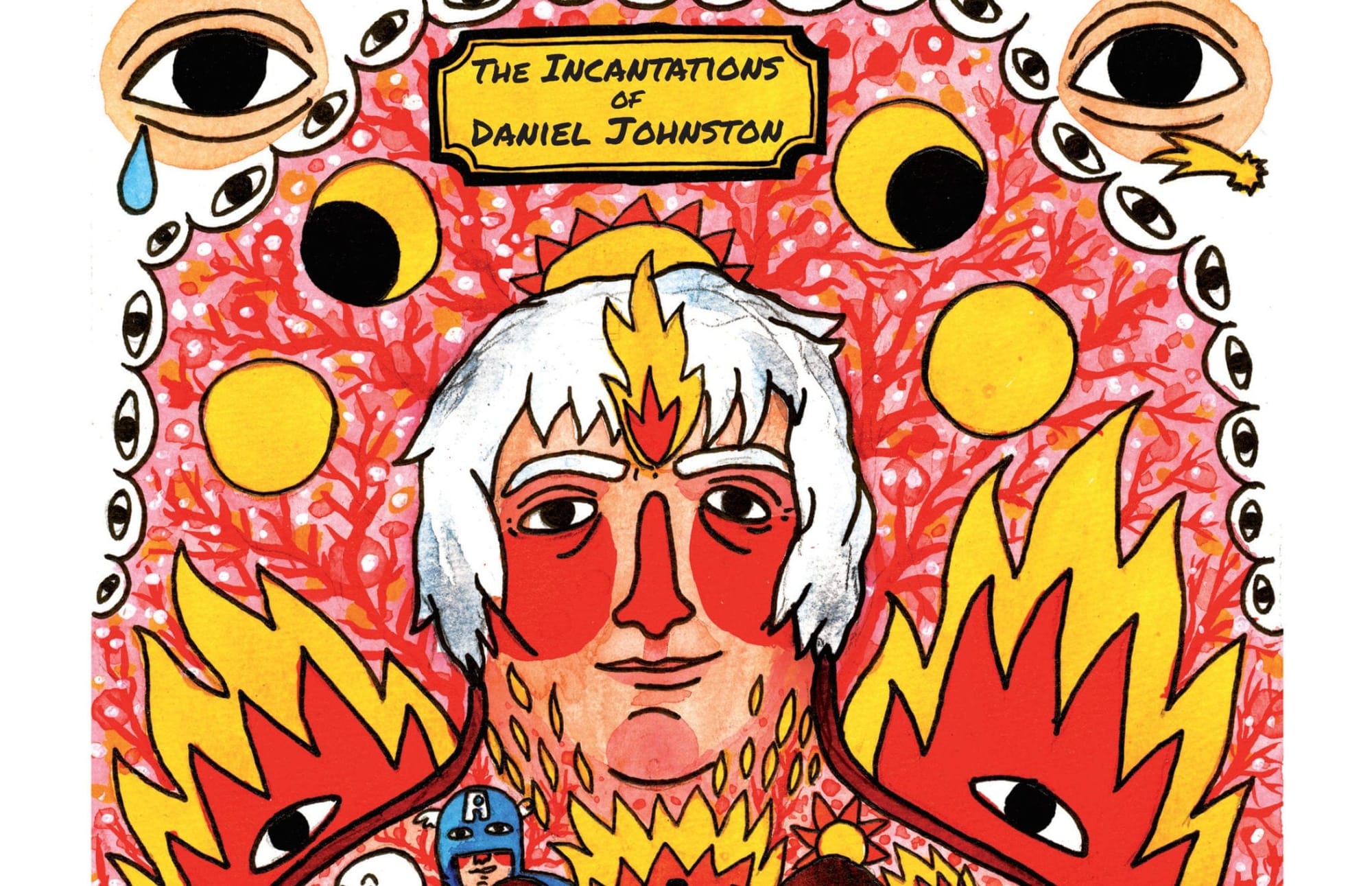
- The Incantations of Daniel Johnston by Roberto Cavalo and Scott McClanahan is a really lovely graphic novel about the musician, who I was only introduced to a few years ago, and is as much about his artistic career as it is the dark, symbiotic relationship between art and audience.
- Settling is a really lovely TV show on ThreeNow! It feels like a throwback to the kind of romantic comedies that speak most to elder millennials, so if that’s your thing, get stuck in.
ICYMI:
- I wrote a little essay about the arts funding crisis in New Zealand for this very newsletter.
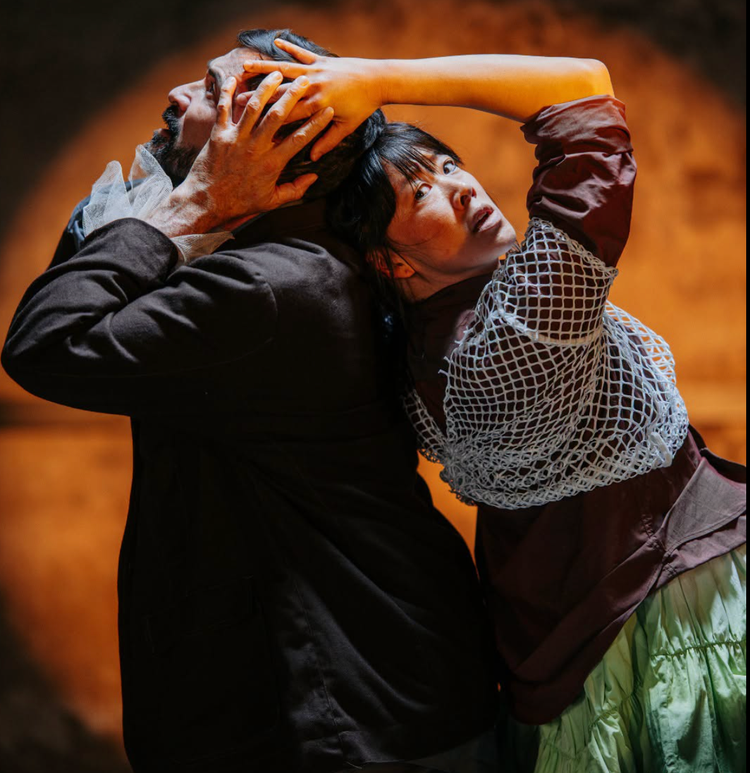
- Over at The Big Idea, I interviewed Sir Gregory Doran (a Shakespearean legend), Amanda Tito (currently starring in Auckland Theatre Company’s Macbeth) and Kayleigh Haworth (a performer, high school teacher, and friend) about the state of Shakespeare in Aotearoa in 2026.
As always, reading and writing takes time, and if you want to support the amount of time it takes (and ensure that the scant amount of meaningful coverage of local art can continue), please considering supporting Dramatic Pause with a paid subscription ($8 p/m, $60 p/a) and if you can't afford a paid subscription, please share the work with your networks!

Member discussion