Critical Corner: YMCĀ
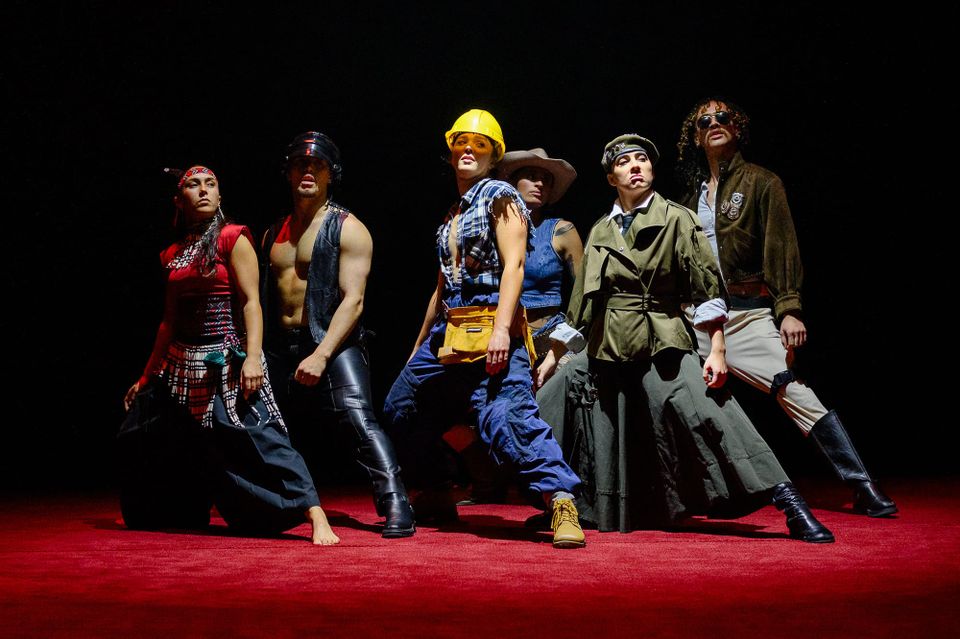
In this edition of Critical Corner, a review of YMCĀ, the new work from Atamira Dance Company, choreographed by Oli Mathiesen (The Butterfly Who Flew Into The Rave).
The Village People are a curious bunch. "YMCA" is a multi-generational hit, with choreography that even the least movement-inclined amongst us can nail. They are regarded as queer icons, despite their actual sexual preferences and recent political affiliations. The group – who have had many, many members over the years, many gay and many straight – were dressed as exaggerated versions of various caricatures. There's the leather man, who is maybe also a cop or maybe that role was sanitised as "cop" to me as a child although I'd argue a leather man is a more community minded figure, there's the cowboy, the construction worker, the GI, and the Native American. The last of which is, ah, not a job.
It's in the Indigenous that Atamira Dance Company and Oli Mathiesen's YMCĀ finds part of its inspiration, gaining a tohutō on the way. The group is reimagined through a "distinctly Māori and takatapui lens", according to Mathiesen in his artist statement. That is made clear from the opening movement of the show – a immediate reclaimation of these identities, or iconographies, by the six Māori performers onstage (Abbie Rogers, Caleb Heke, Sharvon Mortimer, Madison Tumataroa, Tai Taranui Hemana, Toalei Pearl). In these initial moments, the piece feels like a celebration, a very simple transaction of reclaiming what works about these explicitly queer images and archetypes, and discarding what doesn't work.
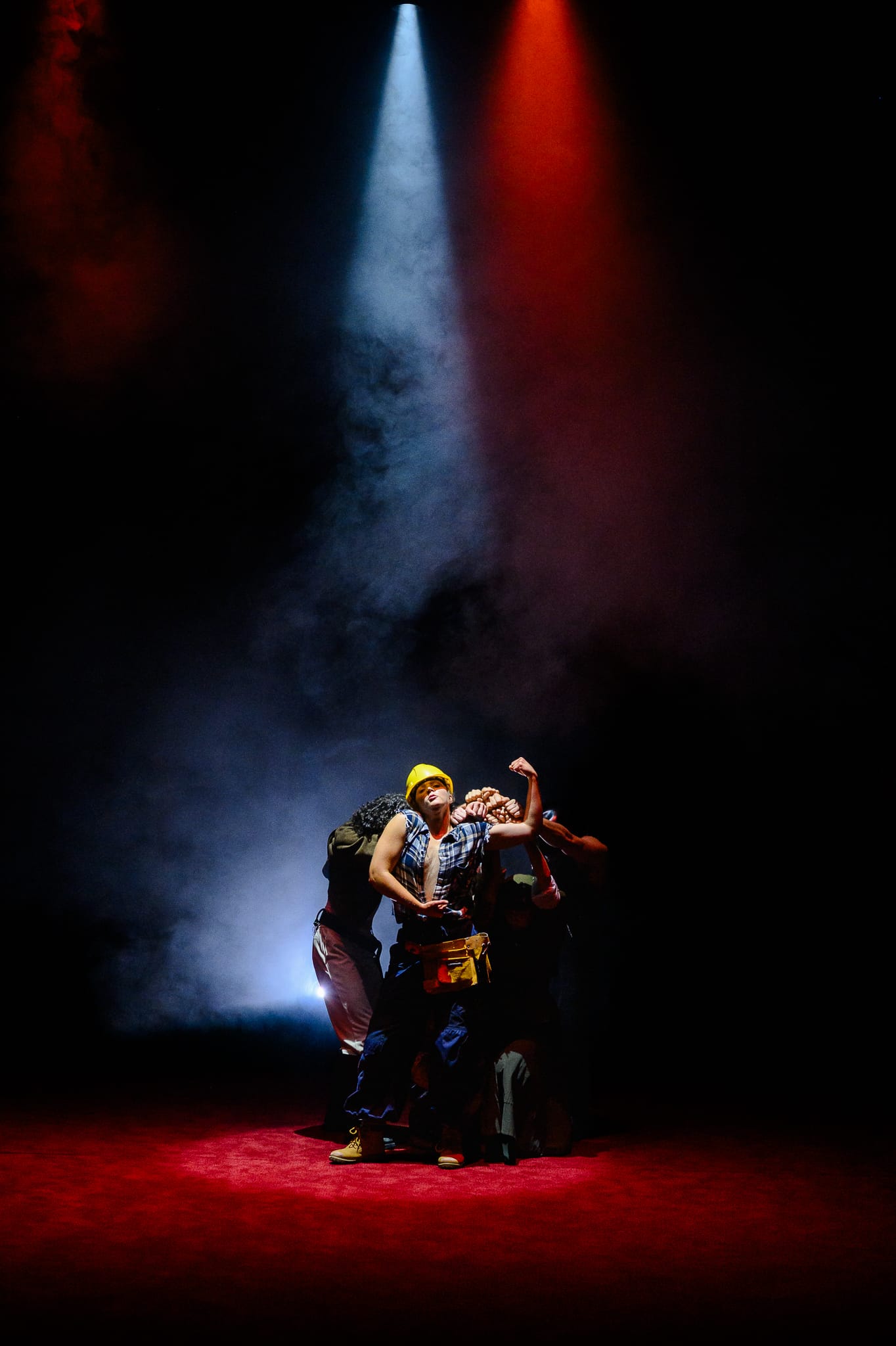
YMCĀ is a cleverer, more confident, and more complex piece of work, however. Over the next hour, played out over a lush, deep red, club room that deconstructs itself, these imageries and how they interplay with lived, physicalised, queerness are also deconstructed by the performers. The ensemble of six breaks apart, into clear and distinct pairs. The most impressive, and striking of these, are a couple linked together by a pair of handcuffs; two characters, two bodies, two imageries intertwined, as much in conflict with each other as they are complementing each other.
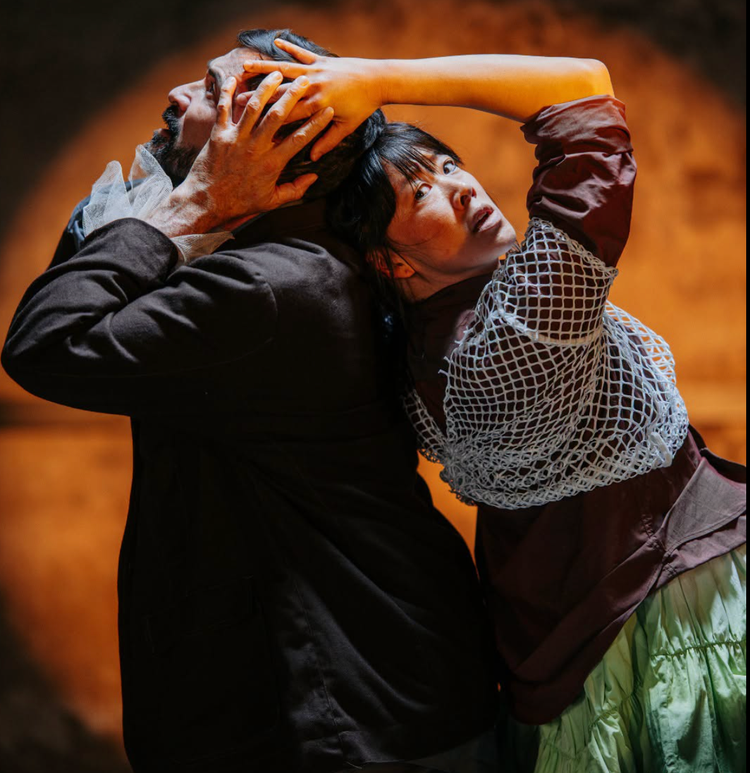
These pairs move on to the two most stirring, and provocative, movements in the show. In the first, Captain James Cook (not named, but bleakly, immediately as recognisable as any of the Village People, and played by Mathiesen himself) enters, or more or less colonises, the stage. What follows is a brilliantly choreographed orgy of sexualised violence, or violent sexuality, whichever you choose, ending with the most unforgettable image of the hour. In the same way that the Village People may have, in theory, if not in practice, reclaiming masculine images for queer purposes, in this moment, Mathiesen is reclaiming – or reinterpreting – an immediately recognisable colonial figure for queer, Māori purposes. It's a moment that could only come after the celebration and interrogation of indigenous bodies that happens in the first parts of YMCĀ, and it's not one you need a degree to understand.
It brought me back to the immediacy of Mathiesen's work The Butterfly Who Flew Into The Rave; the kind of dance show that spoke to something primal, rather than something academic. The image of Captain James Cook, and even the image of his death, rendered in art, lives deeper beneath our brain. Many of us might have grown up with his death being regarded as a tragedy, an ignoble end for such a man. Others might have grown up with it being regarded as just desserts. Many of us might sit somewhere between the two. Regardless of your understanding of it, what Mathiesen does with this image sits somewhere as primal as anything in Butterfly did. It's an immediate shifting of understanding, of context, of image.
Beyond the concept and the choreography, one of the highlights of the show is Rowan Pierce's lighting. There's the obvious beauty of it, achieving the rare feat of being able to create genuine voids of black and making the deep red of the set look like both an object of fantasy and dread. But then there's also the sheer inventiveness, using quickly flickering lights during a tug-rope sequence to mimic a slightly damaged film being played through a projector, and the use of a light like a swinging spotlight in a military camp. If you ever forget that dance is where some of live performance's most exciting design is happening, this show is here to remind you.
YMCĀ feels like one of those shows that brings an audience together on the same page, not effortlessly, but intentionally. We all know who The Village People are. This show takes what we know and uses that knowledge to broaden our own thinking. It does so with the minds and bodies of indigenous artists and dancers. Brilliantly so, as well. I feel like I could take anybody, with any level of dance vocabulary or familiarity along to this show, and they would get it. They'd feel it, not necessarily in their brains, but in their bones. YMCĀ also re-asserts Atamira Dance Company, and Tempo Dance Festival, as platforms for this kind of work to happen. It also confirms, as though we needed confirmation, as Oli Mathiesen as the rare kind of artist who can consistently turn work like this out. May it ever continue.
YMCĀ runs as part of Tempo Dance Festival until Wednesday 14 October.

Member discussion