Critical Corner: Two new works by New Zealand authors
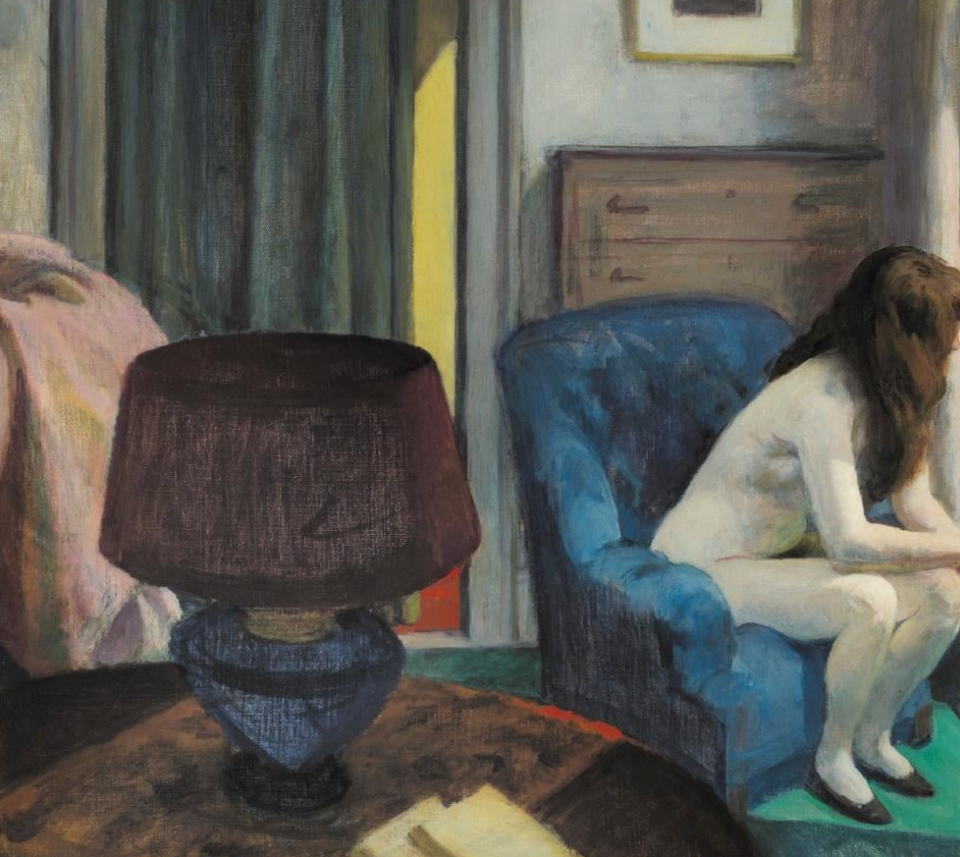
In this edition of Critical Corner, reviews of short story collection Deliverywoman by Eva Wyles and No Money Nice Cock by Victor Brooks.
Compared to other literary forms, I really struggle with short stories. Perhaps it’s the way that I read in general, which is preferring to get through books in a single sitting or two at the most. Perhaps it’s the fragmented nature of collecting them, whether they’re stories by the same author or different authors, stories grouped around theme, stories grouped around setting, or so on and so forth. At their worst, they can feel akin to a haphazardly picked playlists, pulling from greatest hits and b-sides with seemingly little regard for how they sit next to each other, how they reveal each other’s strengths or flaws.
At their best, however, they can be devastatingly moving. Snapshots of a life standing in for the full. An album of photos of different people, but carrying the same lens and frame. They can also be a great showcase for an author, showing how they can deliver the story of a life in but a fraction of the time that a novel, a play, a film, a television series, an opera might. Brevity is the soul of wit, said somebody once and then a lot of people ad nauseum, but it can also deliver the soul of brilliance.
Deliverywoman is one of those collections that delivers the soul of brilliance. While it might be hard to pin down a specific milieu – the story’s settings range from modern-day Wellington to Vancouver to the inner-workings of a video game – the overwhelming movement of the collection seems to be those small connections between people that nonetheless carry the huge weight of humanity.
The subjects themselves also cover a wide range of humanity. There are mothers, like the protagonist of “Mother And” feeling unmoored by a remote funeral of a close friend, a character in “Familial Reunions” hiring a young man to pretend to be her son for a visit to an ailing grandmother. There are people who are securely moored in their twenties and thus unmoored from the world in general. There are friendships, once close, now distant.
“Good Boy”, which follows a man who escapes from his settled life with his partner to work seasonally in a remote area, feels like the centrepiece of the collection. This is perhaps the nature of short story collections as well, that the reader anchors themselves in one story and sees it as the centrepiece. Wyles captures with precise detail the paradoxical, ouroburos-like mindset of an intelligent, emotionally literate, person who consistently makes bad decisions with the knowledge of bad decisions, but manages to avoid the actual consequences of them (couldn’t possibly relate).
This story also showcases Wyles’ specific skill for picking just the right moment to step out of her protagonist’s headspace to deliver the kind of observation, the kind of reflection, that feels like an absolute bullet to the back of the head, metaphorically speaking. In “Good Boy”, that moment is “I was getting old – but clearly not old enough”.
Those moments are peppered elsewhere throughout the stories. In “So, Sorry”, a woman who feels like she has wronged her old high school friend in some way writes an apology letter that ends up being so much more about her than the person replying to the apology, in that most millennial way possible. Wyles really balances a thin line here – how aware is this woman? How unaware is she? And most key: How aware is Wyles?
Every writer has their blind spots when they encounter their own characters, but perhaps the kindest thing I can say about this collection is that Wyles views her characters from 360, with full empathy but without entirely letting them off the hook. This is best encapsulated in “Good Boy” but present in every story. I’ll be thinking about the fragment: “From Annalise’s view, the world is shaking. For Josie, jostling. But sometimes they feel what the other has, meeting somewhere in the middle, as all swings must.
Occasionally Deliverywoman makes a stab at speculative fiction, an angle I’d be fascinated to see Wyles move into in future work. I’ll own up to my own relative unfamiliarity with the short story form, and my own overfamiliarity with video games but I believe the worldbuilding needed to set up “Twinning”’s hypothetical video game – a form that in itself does not lend itself to adaptation to any other form whatsoever – would be beyond even the most brilliant of short story writers. The other story that leans into this, the title story, is absolutely brilliant, with just the right amount of detail needed to illuminate the life of its central character, an absolute killer ending and a phrase I wanted to write on the ceiling above my bed: “I look at her like I am swimming inside her.”
As it stands, however, Deliverywoman is an absolute triumph: a debut full of greatest hits.
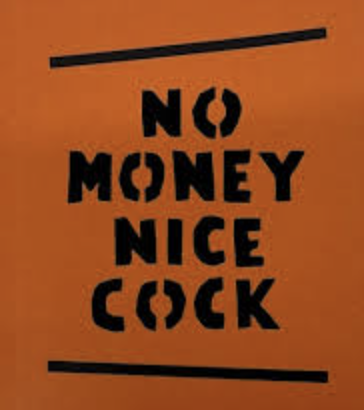
No Money Nice Cock is definitely the contender for the best title of the year. This new memoir, by Victor Brooks (no relation, probably) absolutely lives up to the promise of the droll, to-the-point, title.
Brooks recounts the first fifty years of their life with the appealing voice of someone who has seen it all. Names are dropped that will be familiar to people of a certain age – Sandra Bernhard, The Strip, Khuja Lounge, Flintlock – and he lurches back and forward, though mostly forward, through time. Although Brooks has clearly had his struggles with various things, including addiction and being a queer person in the 90s, he never asks for sympathy. He barely even asks for understanding, at least of this time in his life. Everything is conversationally matter-of-fact, which allows him to land some real killer lines, like “Bulimia isn’t as moreish as smack or hot chips.”
The second half of the memoir focuses on Brooks’ decision to affirm his gender with surgery. Brooks really zooms in for this section, and it’s to his credit; as with many surgeries that I have not had, I really have no idea of what the specifics of what trans people of any gender go through should they choose to travel down the surgical path, to use gentler language than Brooks ever does. His conversations with surgeon Maya are winning, appealing, and show a “roll with the punches” mentality that we understand, from reading the first half of the memoir, is hard-earned.
As with many memoirs, it’s one that I longed to listen to rather than read. Brooks’ voice is so casual and conversational that it makes you understand why – or more pertinently – how, he worked in hospo for as long as they did. It also made me realise why they went into teaching, reading this book made me wish that I had Brooks as a teacher. If this is how he writes some of the thorniest things a person can go through, I can’t imagine how brilliantly he teaches other things.
Often, memoirs can be quite specific with what they reveal, and can be limited by the author’s own limitations for reflection. Specifically, the author’s privilege can be elided for whatever reason, although you would assume it’s for fear that an acknowledgment of privilege would immediately decrease the reader’s ability to empathise or sympathise with the author (and there’s one example of a deeply popular memoir from the past decade where the author’s privilege is so obliquely acknowledged that its absence elsewhere completely reframes the entire endeavour).
Brooks has no such limitations, and that’s part of what makes No Money Nice Cock such a refreshing and illuminating read. He’s able to acknowledge the privilege that comes from being an intelligent, white (or as Brooks identifies, self or otherwise, yt), and reflective human being. A trip to Haiti, which had me clenching in dread that I was about to read some Eat Pray Love type of revelation, instead is one of the big turning points in the story, as it appropriately was in his life. From here, the book doesn’t settle, but rests comfortably in a place of self-acknowledgement: He punches up with vigour (yes to tagging a certain politician’s parents’ property), and reaches down with grace (with patience to those younger and less knowledgeable than him).
You hope, at the bare minimum, to come away from a memoir knowing more about the person who wrote it. Brooks achieves this, handily. This memoir does a tremendous job of covering his life with an enviable amount of self-reflection, self-knowledge while precisely capturing the world that he has moved through for half a century. I’d happily read the memoir of his next thirty years. Where No Money Nice Cock (always a thrill to type) really succeeds, however, is giving me insight into a process, a life, that illuminates a part of the world that I’d never thought about in depth before. It’s a gift of a story, shared wisely, generously and hilariously.
Deliverywoman is published by Influx Press and can be purchased from multiple outlets. No Money Nice Cock is self-published and can be purchased from multiple outlets.

Other Things I’m Consuming:
- Marvel Tōkon: Fighting Souls is chaos and ridiculously fun. I haven’t been able to get into a fighting game for ages, but this has enough bright colours and fast moving objects to keep me invested.
- I was moderately pro-Music, Fashion, Film when it came out but I’m obsessively pro-Music, Fashion, Film following Charli XCX’s Lollapalooza performance (which also has a brilliant performance of “Track 10”). It’s great watching, and also pretty damn decent background music.
- I’ve been reading a lot, as per, and the best recommendations I can give are Sad Tiger by Neige Sanno (the best book I’ve read about processing deep trauma and living as an art-making adult with it) and Five Weeks in the Country by Francine Prose (which turns the famous lore of Hans Christian Andersen crashing at Charles Dickens’ house for five weeks and making his life crazy into something beautiful and sad, but profoundly true about writers).
Further Reading:
- I wrote something for The Big Idea about Massive’s 35th anniversary, really getting into the important incubation work the company does for artists in Tāmaki Makaurau and across the country.
- Madeleine Chapman has had two killer pieces for The Spinoff across two days. One about aged care in New Zealand (reported) and one about supermarket loyalty schemes (opinion, but correct).
Other Stuff:
- I have a massive backlog of New Zealand books to work through and review over the next wee while, so expect regular Critical Corners for a few months. As always, reading and writing takes time, and if you want to support the amount of time it takes (and ensure that the scant amount of meaningful coverage of local art can continue), please considering supporting Dramatic Pause with a paid subscription ($8 p/m, $60 p/a) and if you can't afford a paid subscription, please share the work with your networks!




Member discussion