Cabaret: A Response
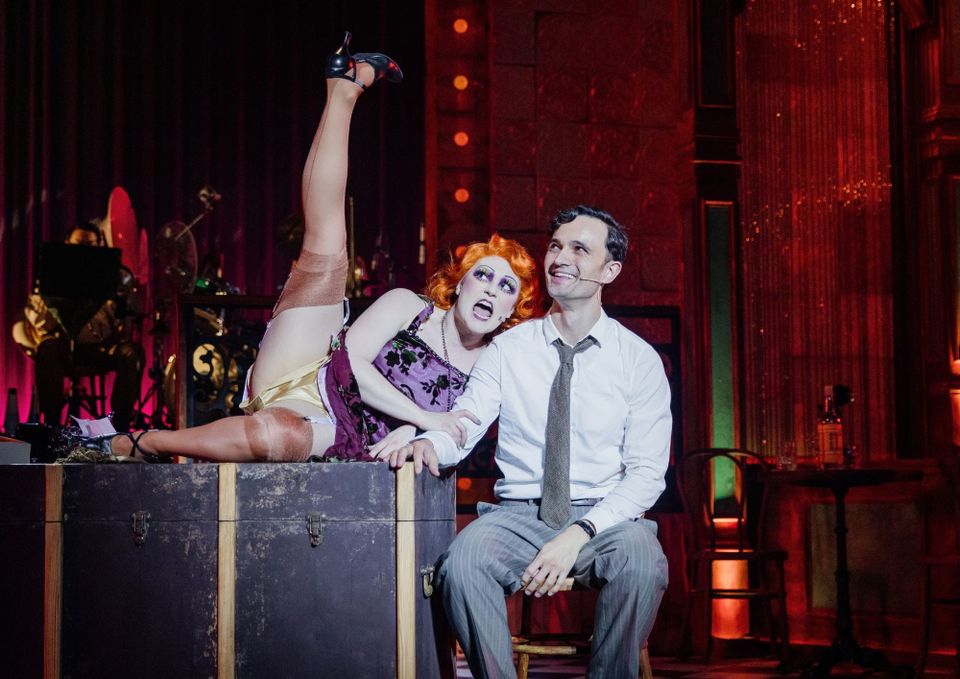
A response to Theatre Company’s new production of musical theatre classic Cabaret.
As musicals go, Cabaret is one of the most robust. Few shows are as effortlessly relevant – let alone enjoyable – sixty years after their debut. The Kander-Ebb musical, is set right on the precipice of social change, the end of the Jazz Age and the rise of Nazism in Berlin, and shoves the audience’s face against the glass so they can see how monumental, and how bleakly smooth, that transition is. It’s one of the few musicals that can potentially achieve true chaos and tight choreography in the same breath, while weaponising the warmth an audience generates towards watching a musical to deliver a truly upsetting undertow. There’s a reason why Cabaret is a lot of musical theatre aficionado’s favourite musical.
As such, there’s no wrong time to revive Cabaret. Somewhere in the world, at any given time, is on the precipice of changing from a good time – or at least a good time as perceived from the inside – into a bad time, to massively understate the rise of global fascism. For Auckland Theatre Company’s return to the big annual musical, amongst a local musical theatre landscape rife with touring shows, pro-am productions, and the odd legitimate professional production, it’s an extremely wise one.
If you’re an audience wanting to watch a good musical, this production of Cabaret is a safe bet. The cast is on-fire, the choreography is on-point, the live band is doing their thing extremely well, and the production balances the necessary intimacy of the show with our expectation of scale. The overall trajectory of the show also works. The descent into darkness comes less with active choices but more with passive concessions to convenience and not rocking the boat, as bleak as parallel to the state the world is in today as any. Cabaret is not a subtle show, and it’d be impossible to walk away from this production without an understanding of what it is about. The end of civilisation doesn’t come with someone screaming into the abyss, but gasping for the last smidge of oxygen.
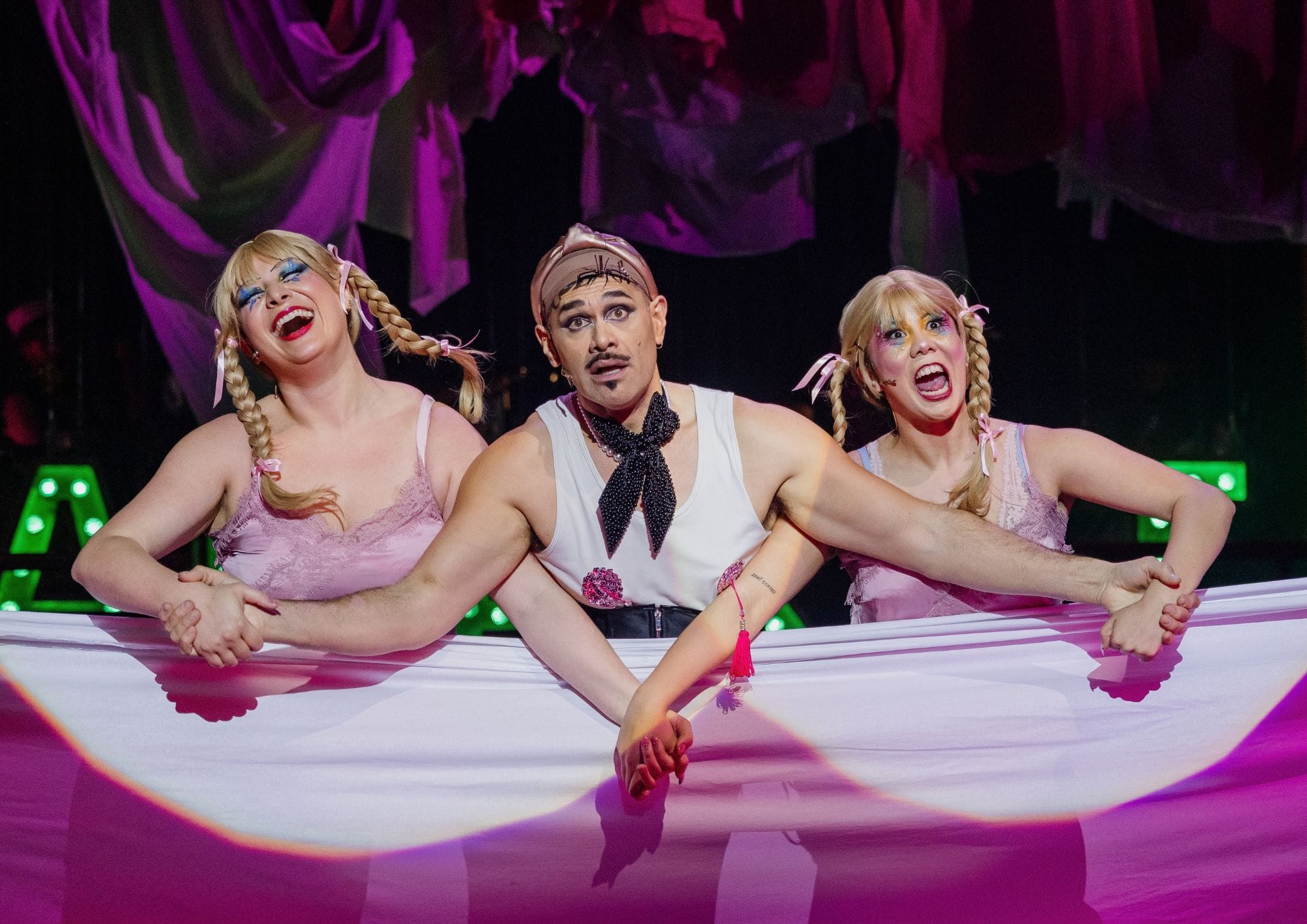
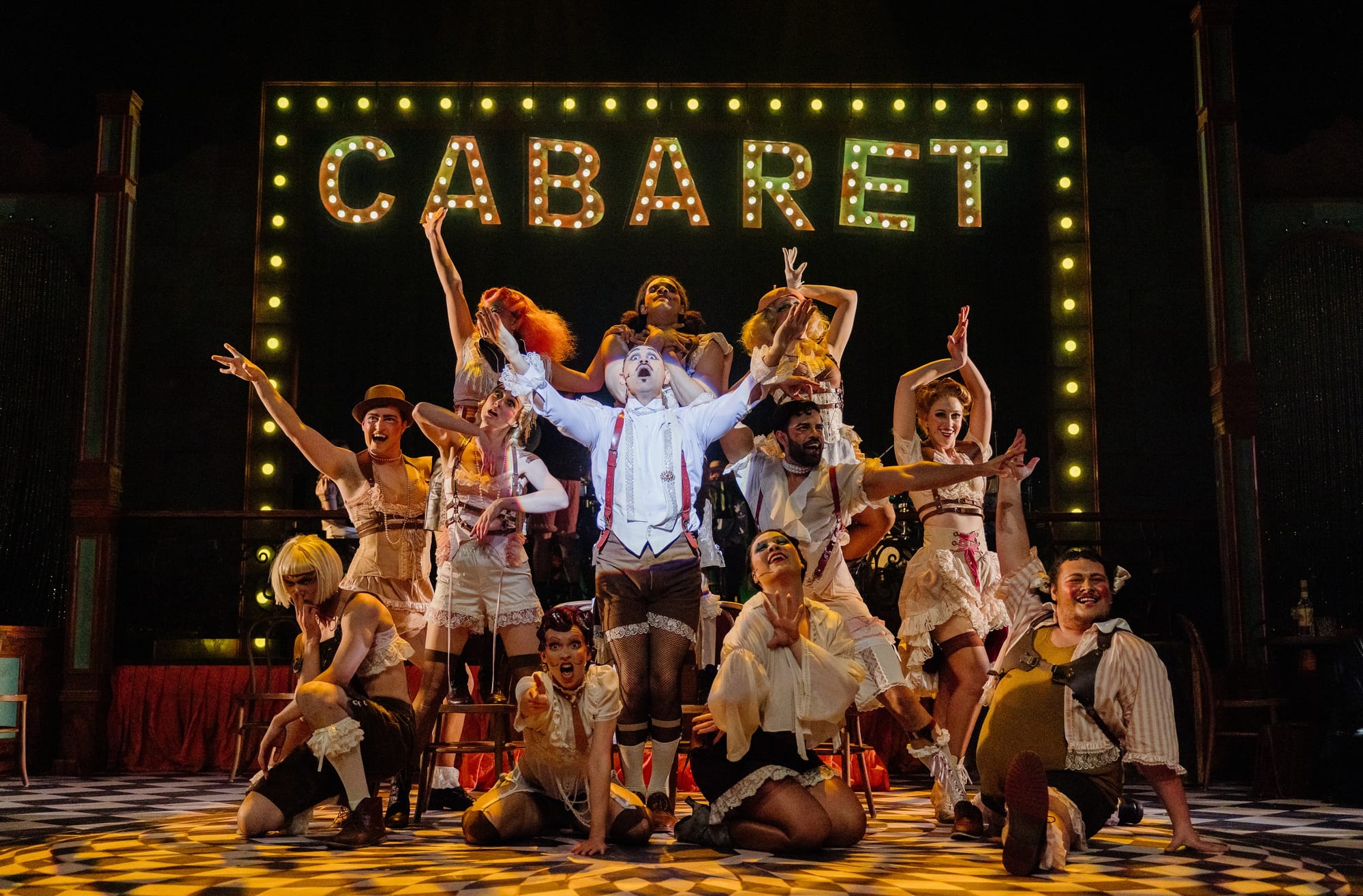
Where this production, directed by Benjamin Kilby-Henson, falls short is in the experience, in the nuance, in drawing the audience into the whirlwind of the show. The first act, where author Clifford Bradshaw (Justin Rogers spinning pure gold from a true wet blanket of a role) is drawn into the grips of the Kit Kat Club and its “star” performer Sally Bowles (Nomi Cohen, incredible), feels less like chaos and more like a display of athleticism. It’s always a pleasure to see this many bodies onstage, especially when they are choreographed so well (Kira Josephon), but the overall image feels less like the depravity of Berlin, and more like a dioramatic display. The title lifting in and out of the stage doesn’t help very much here, working neither within the world of the play – the club in Cabaret is not called Cabaret, just as the opera house in Phantom of the Opera is not called Opera House – nor within the audience’s meta experience.
The meta-ness of the show, which has felt more and more present as audiences get more au fait with meta-theatrical techniques, is blurry here. The Emcee, played by Matu Ngaropo, is rendered hazily here. This is not anything to do with Ngaropo’s performance – gleaming with virtuoso brilliance in the first act, and dripping with cruelty in the second act – but with how his presence is framed. As the essential steward, and harbinger, of fascism, the Emcee feels as though he should be a constant presence. Fascism is not just brought in with the bigger musical numbers – or the intentionally obvious “Tomorrow Belongs to Me” – but in the smaller interpersonal interactions, between Fraulein Schneider (a devastating Susan Brady) and Herr Schultz (a heartbreaking Steven Ray) as they lightly court, or the willful ignorance clashing from both directions courtesy of Sally and Cliff. By placing the Emcee only in these big moments, it takes away an entire aspect of the show. It allows Cabaret to be a bit more subtle, to allow the audience to draw their own conclusions, but again, Cabaret has never been subtle, musical theatre rarely thrives on the implied, and neither show nor form seems fit for this particular purpose.
The show’s drop into Nazism – a costume reveal – is extremely effective. The hints of what was already there comes out in a sharp reveal of red, of a symbol we’re all bleakly familiar, at one point from history, and now from the rise of people who would never be caught dead seeing Cabaret. Less effective, however, is the execution of act two more broadly. The tragedy and genius of the text is that it all but says that the conditions that allow the depravity and debauchery of the first act – where people can go about their lives not caring and allowing people to be the people they want to be – are exactly the conditions that allow for the second act to occur. The same language, both aural and visual, are now applied to a different setting and we’re invited to interrogate that.
With the exception of “If You Could See Her (The Gorilla Song)” – the highlight of the entire show, hands down – act two is tremendously earnest. There is very little subversion, very little implication, here. We are watching Nazis be Nazis now, and watching our lead characters suffer the consequences. The dissonance between the show turning into a bummer and the experience being enjoyable is less like a conversation and more like two experiences sitting next to each other. Yes, a descent into Nazism is bad, but also we want to see a good musical and feel what a good musical does. Rather than interrogate those two things sitting next to each other, the production simply lets them exist.
It’s a bit of a shame, because all the elements of the show are there. Jonathan Martin is as loathsome and slimy as Ernst Ludwig needs to be, while Hilary Moulder’s Fraulein Kost is the standout of the entire production as the chilly, chaotic, filthy bender of social norms, until the threat of ruining a party requires those social norms – and she even pulls impressive double duty as the Gorilla. The Kit Kat Ensemble (Monēt Faifai-Collins, Vincent Farane, Joel Hewlett, Sophie Jackson, Kira Josephon, Josh Morris, Emily Patterson, Wakamania Seve, Adeel Surendran, Te Ohorere Williams, and Moulder again) are as brilliant an ensemble as you could ask for. The band, led by musical director, Robin Kelly is ever present and earns it, even if I wish there had been some visual done with the constant presence of something that is centre upstage. It’s simply in this production’s interpretation, rather than the execution thereof, that it falters.
One of the interpretations that doesn’t falter is how this production dives into Sally Bowles. Sally is a fascinating touchpoint in musical theatre – there are essentially two canonical pathways The first is the Liza Minnelli interpretation, crystallised by the 1972 film. A true triple threat, Minnelli burns the screen up with her Sally; you believe in her brilliance because it is undeniable. You believe she’s the best actor, best singer, and best dancer, you’ve ever seen, because well, Liza Minnelli. The other interpretation, made famous by Sam Mendes’ 1993 production, is casting a performer who is known more as an actor than as a singer, and using the potential tragedy of Sally Bowles actually not being very good at the thing that she so badly wants – needs – to be good at as another expression of the show.
Cohen marries both of these interpretations. She’s a tremendous singer and dancer, as anyone who has seen her in any musical will know, but she also nails how fragile Bowles’ bluster is. Her version of Sally is a balloon full of glitter, inflated to full when she’s onstage, but so easily popped into a shiny mess by the slightest puncture. Bowles’ descent into doom exists as a microcosm for Cabaret as a whole; how easily inaction and complacency can be as self-destructive as intention and cruelty, and Cohen doesn’t just dive into that descent, but she projects it out as far as it goes. Sally’s destruction is Cabaret’s.
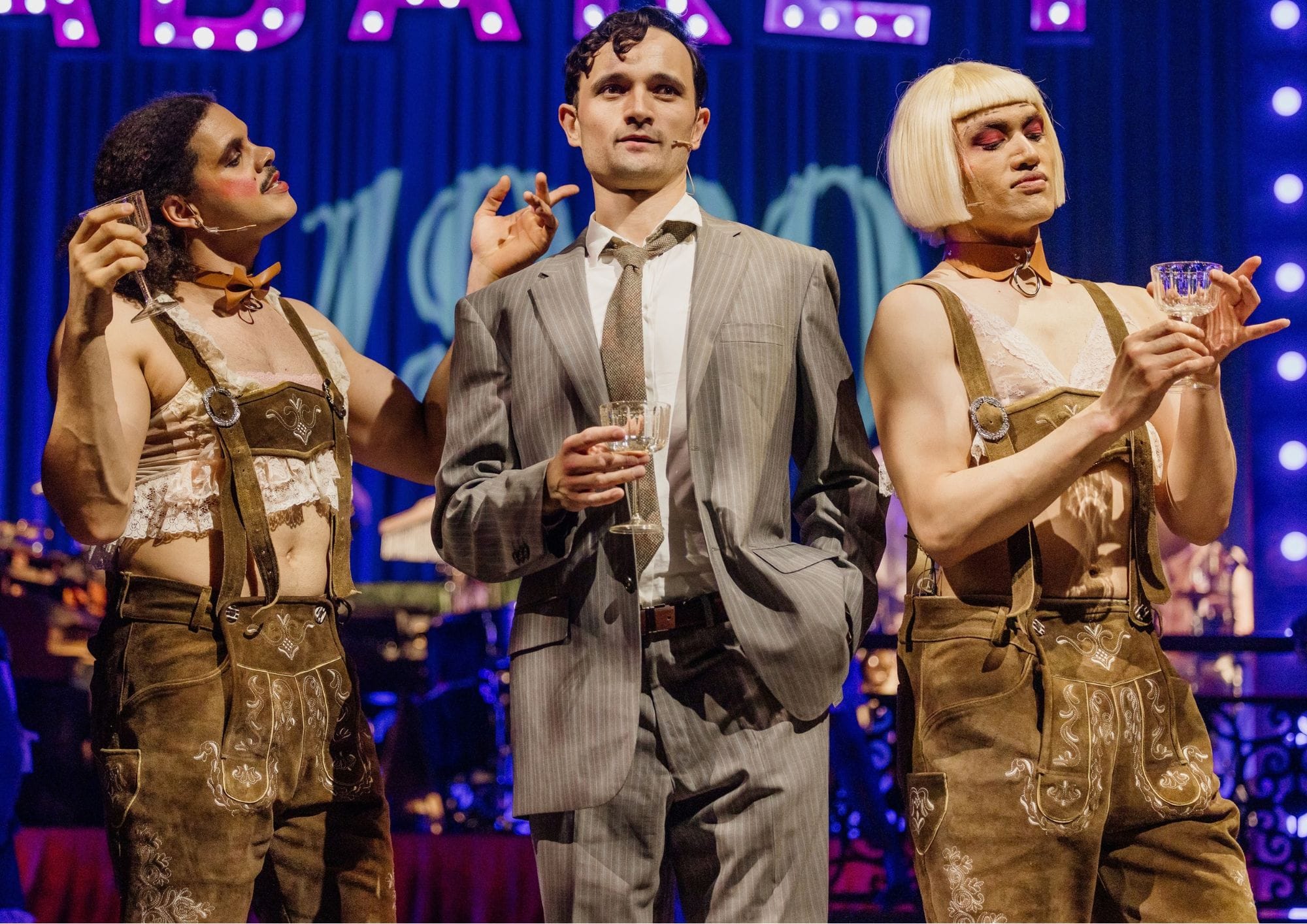
The clarity of this interpretation makes the show’s approach to casting curious, and discombobulating. Thankfully, Cabaret is a cast made up of people from varying backgrounds, because I don’t think anyone wants to see an all-white production of this particular show in this particular year (any particular show in any particular year?). However, the actual casting of people of colour in the show muddies the waters. What does it mean for the Emcee to be a Māori man in a production in Aotearoa in 2026? What does it mean for Cliff to also be Māori, and to be the only other lead who is a Māori man? What does it mean for several POC actors to be playing Nazis in that same production, to be wearing swastikas?
There’s a tricky line to ride here, especially when it comes to a show as nakedly, as obviously, political as Cabaret is. I’m a firm believer in colour conscious casting, as both an artist and someone who enjoys art. I want to see more diverse bodies and hear more diverse voices onstage. But there’s a difference in casting, say, The Little Mermaid or Frozen, without clear intention as to why a person of this background is in that role, and Cabaret, where the drama comes from unwarranted, nonsensical, prejudice against people for being born the way they are. The bodies of the performers onstage, and what those represent in a real life context, matters a lot here. We’re in 2026, and it means something to cast people in certain roles in certain shows. That is to be engaged with, and it feels, for whatever reason, like the production engaging with the experience of watching Cabaret rather than the core of Cabaret itself.
Cabaret is a good time. The musical numbers go hard. The singers hit their notes, the dancers hit their marks, there’s always something fun to look at. It’s a return to the form that Auckland Theatre Company can do extremely well; musicals are scale, performed to within an inch of their lives. Within that scale, the politics and the actual text get a bit lost; the production might put Cabaret in all caps above the stage, but it’s what onstage that matters. Life is a cabaret, old chum, but this Cabaret doesn’t always feel like Cabaret.
Cabaret runs at the ASB Waterfront Theatre until October 25.
This review was commissioned by Auckland Theatre Company. You can find more information about this commissioning structure here.




Member discussion